
You've got a Waikiki hotel booked, someone in the family wants to see a turtle, and your browser is full of tours that look almost identical. What's harder to picture is the actual morning: finding the boat, getting comfortable with the gear, stepping into open water, and knowing what to do when a turtle appears.
The useful question isn't just which turtle tours cost less. It's what the crew does before, during, and after your swim. A well-run trip should make those details clear without promising that the ocean, or the animals, will follow a script.
Table of Contents
- A Typical Morning on a Waikiki Turtle Tour
- Understanding Turtle Canyon and Why Tours Go Offshore
- How a Two-Hour Turtle Canyon Excursion Is Structured
- Equipment, Safety Briefing, and Family Suitability
- Choosing the Right Time of Day for Your Turtle Tour
- Respecting Honu and Protected-Species Etiquette
- What to Bring, Wear, and Confirm Before You Book
- Why a Well-Run Turtle Tour Matters Beyond the Photo
A Typical Morning on a Waikiki Turtle Tour
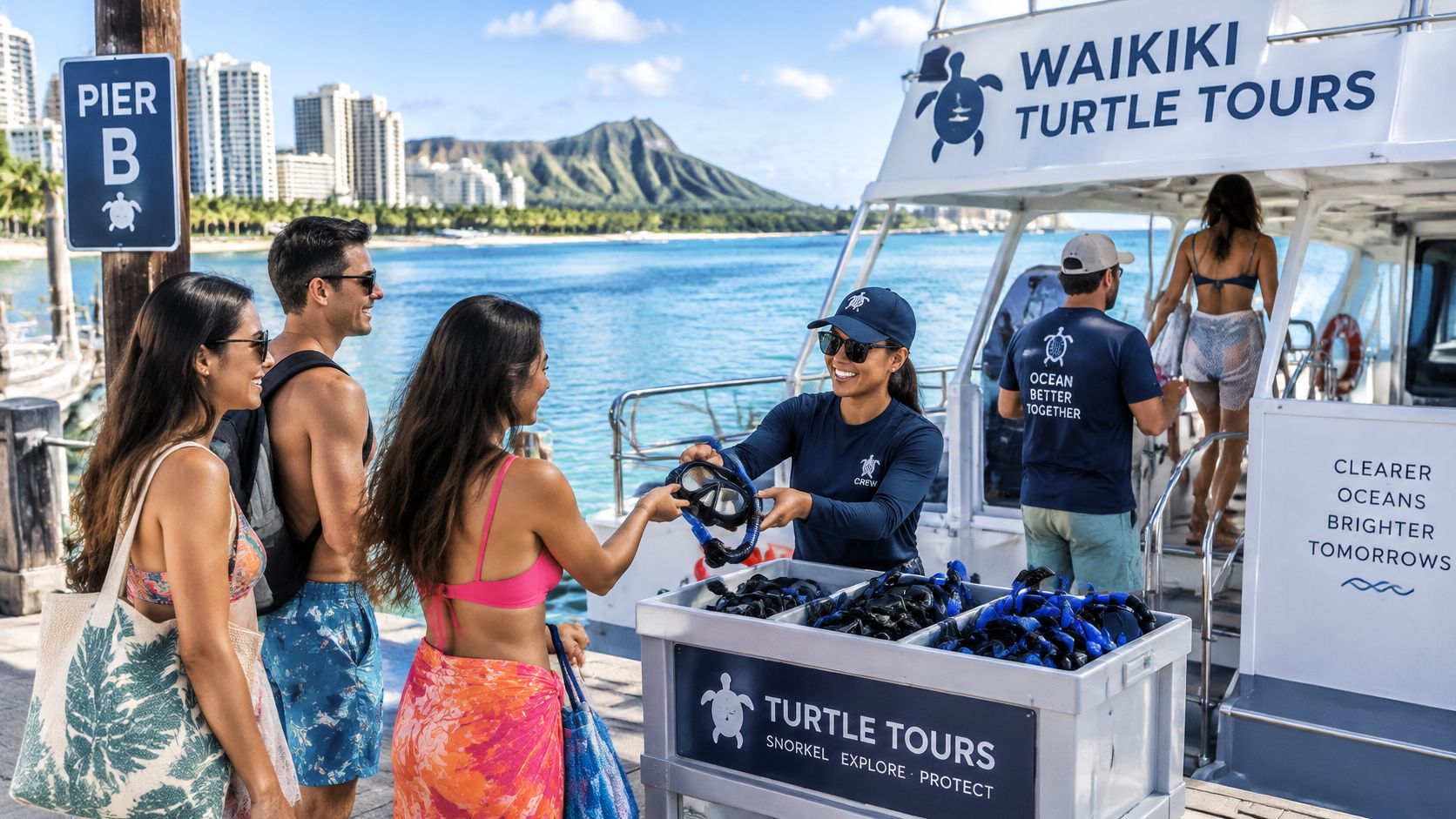
At Pier B, the morning starts with practical matters rather than wildlife. Have your reservation ready, keep your belongings together, and listen for boarding directions instead of following another group toward a boat. Check the departure instructions before leaving your hotel, since arriving at the harbor isn't the same as reaching the correct slip.
Once aboard, settle your bag where the crew directs and keep walkways clear. As the boat leaves the harbor, the Waikiki skyline and Diamond Head provide the backdrop, but pay attention to how the vessel moves. This is your chance to tell the crew that you're nervous, prone to seasickness, or unsure about getting back up a ladder.
Before anyone enters
At the reef, look beyond the color of the water. Watch the surface movement, notice whether people are drifting, and listen while the captain explains the entry plan. Attractive blue water doesn't tell you everything about swimming conditions.
The first useful briefing answers concrete questions: where to enter, whom to follow, how to ask for help, and how to return. Gear adjustments belong here, not halfway between the boat and the guide.
Practical rule: Don't enter because everyone else is entering. Enter when your equipment fits and you understand the return plan.
Your first moments should be about comfortable breathing and finding the guide, not searching frantically for turtles. If a shell breaks the surface nearby, resist the urge to launch toward it. Let the crew establish the group's position, and let yourself settle into the experience.
A good morning feels organized before it feels exciting. That's what gives a first-time snorkeler room to enjoy the encounter.
Understanding Turtle Canyon and Why Tours Go Offshore
Turtle Canyon is an offshore snorkeling destination, not a beach entrance with a trail leading to the water. Treat it as a boat-access outing rather than a place you can reach by swimming outward from Waikiki. The publisher describes its excursion as access to an offshore reef that isn't safely reachable from shore.
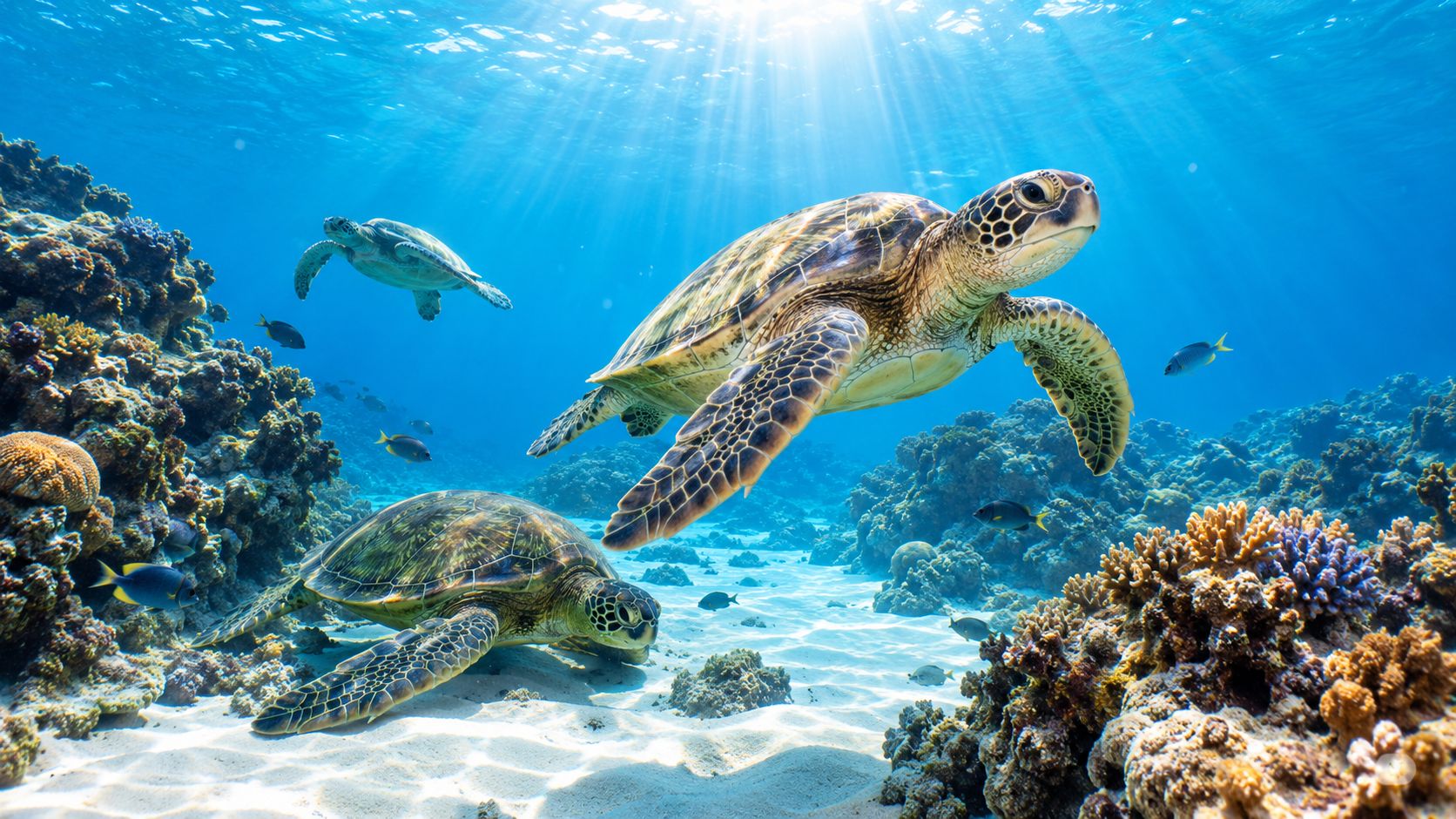
The name can also create the wrong expectation. Don't picture standing in a shallow channel while turtles pass at eye level. Plan for a surface-viewing experience over reef habitat, with the boat serving as your entry point, rest area, and way home.
Build the right mental map
From the surface, your experience depends on what you can comfortably see beneath you, not on reaching the bottom. Ask the crew to explain the day's viewing area, where you should remain, and which direction to take if you lose sight of the group. Don't interpret another swimmer's position as permission to follow them farther away.
Descriptions of turtle gathering spots or cleaning stations shouldn't become promises that animals will occupy a particular patch of reef. A responsible guide works with the animals' location and the conditions, rather than insisting that yesterday's route must work today.
- Choose boat access if you want transport to the viewing area, a crew-led entry, and a defined return point.
- Consider a managed shoreline outing if staying close to land matters more than the boat experience.
- Ask about the actual swim rather than relying on labels such as easy, sheltered, or beginner-friendly.
If your searches have mixed together different place names, the Turtle Island Honolulu guide is a useful planning reference.
The important distinction is access. A shoreline outing and an offshore turtle tour aren't interchangeable, even when both advertise snorkeling. Choose the setting that suits your comfort, rather than assuming every reef experience asks the same things of you.
How a Two-Hour Turtle Canyon Excursion Is Structured
Advertised trip length isn't the same as swimming time. The publisher's Turtle Canyon excursion details describe a two-hour outing with approximately 60 minutes of supervised snorkeling, leaving the rest for boat travel, preparation, and the return.
That balance is reasonable. Rushing gear fitting or the safety lesson to advertise more water time would be a poor trade. Equally, a longer booking isn't automatically better if you're likely to want a short swim and a comfortable seat afterward.
I've watched guests fixate on the hour in the water and then get surprised by everything around it. The ride out can be choppy. The briefing takes as long as it takes. Knowing the sequence ahead of time keeps a first-timer relaxed enough to enjoy the part they paid for.
Typical Time Breakdown for a Waikiki Turtle Canyon Tour
| Segment | Typical Duration | What Happens |
|---|---|---|
| Harbor check-in | 15-20 minutes before departure | Reservation checks, boarding directions, and personal preparation |
| Ride to the reef | Part of the non-snorkeling portion | Crew orientation and assessment of conditions |
| Equipment and briefing | Before water entry, with time for adjustments | Mask fitting, flotation checks, signals, and entry instructions |
| Supervised snorkeling | The approximate in-water allocation described above | Guided observation, with an earlier return if needed |
| Exit and return | The remaining operating time | Assisted boarding, equipment collection, and harbor transit |
A minute-by-minute promise would be misleading because the captain must respond to conditions and the group. What matters is whether the operator explains the intended allocation and what could change it. Swell pushing in from the south, a nervous swimmer who needs ten extra minutes at the mask-fitting stage, a turtle resting where the boat usually idles. Any of these can reshuffle the plan, and a crew that says so out loud is a crew that has done this before.
Watch what the crew is doing
During preparation, someone should be available to resolve equipment problems rather than just hand out gear. During the swim, ask who supervises guests and who remains responsible for the boat. At exit, the crew should manage the ladder instead of allowing tired swimmers to crowd it.
More time in the water isn't better value if you spend it uncomfortable, confused, or waiting for help.
You should also be able to finish before the group does. Ask whether returning early is straightforward and whether re-entry is permitted. Those answers matter more to a hesitant swimmer than an impressive maximum swim duration.
Equipment, Safety Briefing, and Family Suitability
A flotation vest is helpful equipment, not proof that someone is ready for open water. The same applies to swimming confidence. A strong pool swimmer still needs to understand the gear, the boat's movement, and the plan for getting assistance.
The 2025 Hawaii Snorkel Safety Study summary reports that 62% of snorkelers who encounter problems are over age 50 and 70% are non-residents, and identifies snorkeling as the leading cause of visitor deaths in Hawaii, according to its snorkeling safety survey summary. Those findings deserve a calm readiness conversation, not an assumption that only beginners need supervision.
What the lesson should cover
Ask the crew to demonstrate comfortable snorkel breathing, how to handle a small mask leak, and the signal for assistance. Try the equipment before moving away from the entry area. If you can't breathe comfortably or keep the mask seated, resolve that problem before continuing.
- Equipment fit: Confirm that sanitized masks, snorkels, fins, and flotation are available in suitable sizes.
- Health readiness: Discuss cardiac or respiratory conditions, recent symptoms, and exertion concerns with a qualified clinician before booking.
- Supervision: Ask how the crew separates wildlife observation duties from helping nervous swimmers and children.
- Stopping: Know how to end the swim without waiting for the scheduled finish.
Family-friendly doesn't mean suitable for everyone
Confirm the operator's minimum age and whether eligibility means boarding, entering the water, or both. A child who meets an age policy may still dislike a mask or feel frightened away from shore.
Ask what happens if a child refuses to enter, and which adult must remain with them. For non-swimmers, don't assume flotation alone makes participation appropriate. The operator needs an honest description of ability, and guests need permission to choose the boat without embarrassment.
Choosing the Right Time of Day for Your Turtle Tour
Choose a departure around your comfort and the actual forecast, not a blanket claim that one time always delivers better turtles. Morning is a sensible starting point when you prefer an earlier outing, less time in the heat, and room in your schedule if plans change. It isn't a guarantee of flat water or clear visibility.
An afternoon departure may fit a family's routine better. There's little benefit in choosing an early trip if everyone arrives exhausted, rushed, or already feeling unwell. Ask about expected conditions for the specific departure instead of treating the booking calendar as a weather forecast.
Compare the things that affect your experience
| Priority | What to ask before choosing |
|---|---|
| Ride comfort | What swell and surface conditions does the crew expect? |
| Underwater viewing | What has visibility been like, and could conditions change? |
| Children's readiness | Which departure fits their normal energy and meal routine? |
| Photography | How might light, glare, and water clarity affect surface viewing? |
| A quieter experience | What group size is expected on that departure? |
Swell, surface chop, and visibility are different considerations. A scenic ride doesn't guarantee a comfortable swim, and bright sunshine doesn't guarantee a clear view of the reef. Let the crew describe each separately.
Leave room for a conservative decision
Ask how seasonal conditions affect scheduling, but be cautious about anyone offering a universal best month or perfect departure time. Your particular day still matters.
A captain who delays, changes, or cancels a trip isn't necessarily failing to deliver. Sometimes that's the decision you want an experienced operator to make. If snorkeling is important to your vacation, avoid leaving your only opportunity until the final available slot, and understand the cancellation terms before you pay.
Respecting Honu and Protected-Species Etiquette
The mistake isn't always touching a turtle. Sometimes it's a group of well-meaning swimmers closing in for a better view until the animal has nowhere convenient to go. A successful encounter leaves the turtle free to continue what it was doing.
NOAA Fisheries and Hawaiʻi's Department of Land and Natural Resources recommend staying at least 10 feet, or 3 meters, from green sea turtles, while NOAA recommends at least 50 yards when viewing from watercraft, along with no-wake operation, avoiding sudden course changes, and placing engines in neutral when a turtle is observed, as explained in the Hawaiʻi marine wildlife viewing guidelines. These are viewing recommendations, not a reason to assume every accidental proximity has the same legal meaning.
When a turtle swims toward you
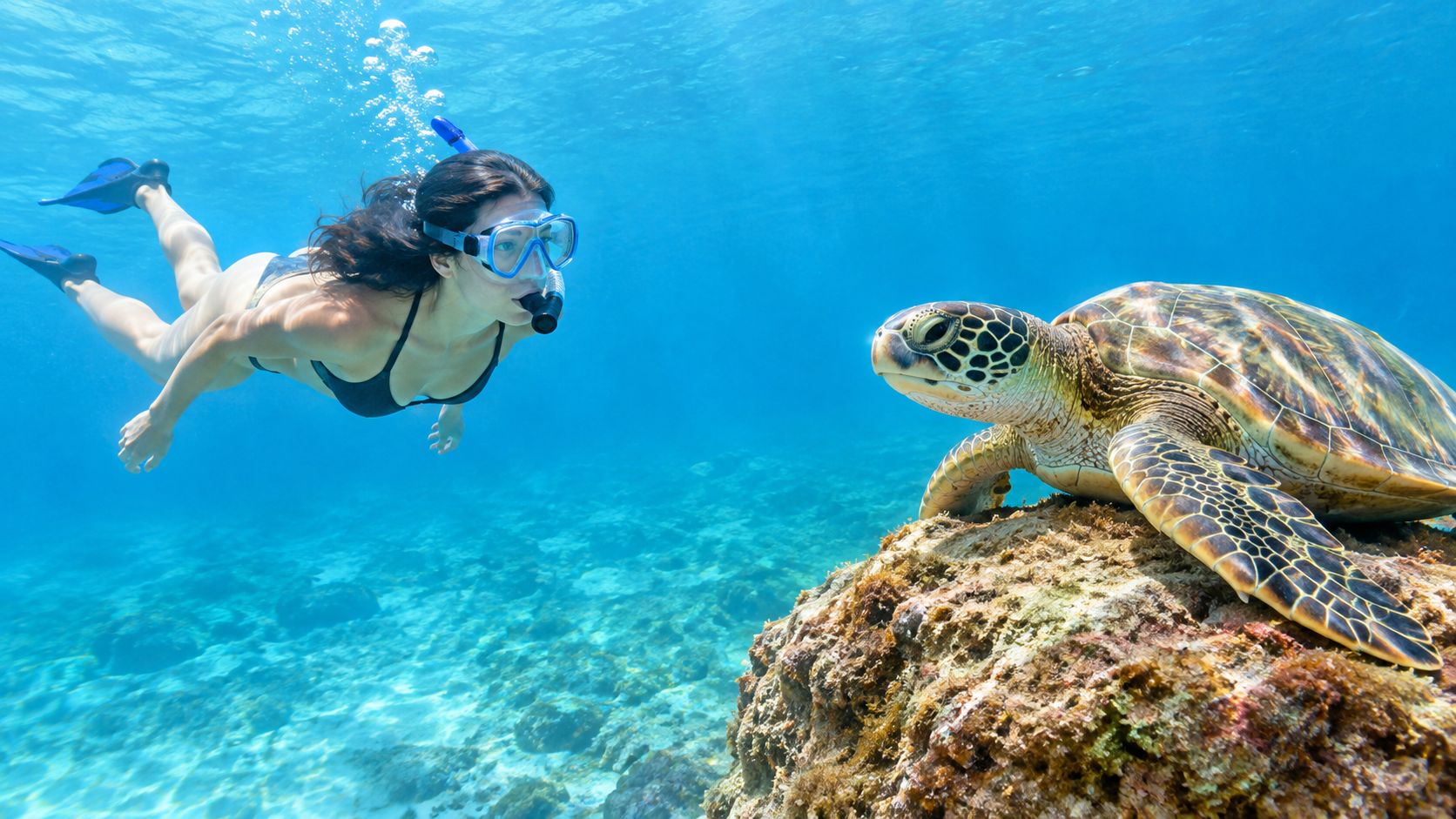
Stop advancing and follow the guide's direction. Don't interpret the animal's approach as permission to reach out, swim alongside it, or follow when it leaves. Keep your movements controlled and give it a clear route past you.
NOAA also warns against encircling turtles or trapping them between a boat and shore in its protected marine wildlife observation guidance. For a snorkeling group, that means resisting the urge to form a ring around the subject of everyone's photographs.
The photograph is optional. Leaving the turtle an unobstructed path isn't.
Evaluate the guide's positioning
Watch whether the guide manages people as well as points out animals. A useful correction might mean moving the group aside, stopping a pursuit, or asking swimmers not to cluster above a resting turtle. Enthusiasm shouldn't override those instructions.
Hawaiian green sea turtles, Chelonia mydas, are protected by the federal Endangered Species Act and Hawaiʻi law, including Hawaiʻi Revised Statutes Chapter 195D and Hawaiʻi Administrative Rules 13-124; unauthorized harassment or harm can bring substantial fines and, in some circumstances, jail time, according to the state's sea turtle protection information.
The practical standard is observation only. Don't touch, feed, chase, restrain, or ride an animal. For more local context before boarding, consult the Hawaiʻi turtle guide. The strongest operator isn't the one promising the closest encounter, but the one willing to interrupt it when guests stop giving the animal space.
What to Bring, Wear, and Confirm Before You Book
Pack for a wet deck and limited storage, not a full beach day. Wear your swimwear under comfortable clothing, keep your hands free for boarding, and ask about the boat's footwear policy. Leave valuables you won't use somewhere secure ashore.
For sun protection, prioritize a rash guard and coverage rather than relying entirely on lotion. The National Park Service recommends exposure reduction and mineral formulations containing zinc oxide or titanium dioxide, while cautioning about sunscreen impacts on reefs in its reef-conscious sunscreen guidance. Don't treat a reef-safe label as a guarantee that a product has no environmental impact.
A compact boat bag
- Sun coverage: A long-sleeved rash guard, suitable sunscreen, and a secure hat for the ride.
- Dry essentials: A towel and a dry bag for your phone, keys, and anything that must stay dry.
- Motion-sickness preparation: A remedy appropriate for you, discussed with a pharmacist or clinician when needed.
- Minimal extras: Leave loose jewelry behind and confirm permission before bringing a hard cooler or bulky bag.
Before paying, ask about group size, guide-to-guest ratio, child supervision, cancellation terms, and whether a guest can remain aboard throughout. Use the operator's frequently asked questions to check policies, then contact the crew about anything specific to your party.
Common pre-booking concerns
What if I get seasick? Tell the crew before departure and ask about your options if symptoms develop. Don't assume entering the water will solve the problem.
Can I go while pregnant? Ask your prenatal clinician about the activity and confirm the operator's policy. A boat ride and offshore entry deserve an individual decision.
Is my seven-year-old ready? Age alone can't answer that. Consider comfort with a face mask, willingness to follow instructions, and whether a parent can supervise without compromising their own safety.
Do I need to bring snorkeling gear? Confirm what's included and whether suitable sizes are available. If you prefer your own mask, ask whether you can use it.
Why a Well-Run Turtle Tour Matters Beyond the Photo
The opportunity to observe honu follows a long conservation effort. Researchers counted 67 nesting females in 1973, state protection followed in 1974, and federal protection arrived in 1978; NOAA's brochure describes recovery to nearly 500 nesting females annually in the monitored population, while noting that Hawaiian green turtles remain threatened, in its Hawaiian green sea turtle recovery overview.
Spend on the operating standard
Tourism can give coastal communities an economic reason to protect living turtles. A WWF comparison found greater average revenue at turtle-viewing locations than at locations using turtles for consumptive purposes, as described in its assessment of sea turtles' value alive rather than dead.
That doesn't make every tour conservation-positive automatically. Your useful contribution is choosing an operator that explains its supervision, respects wildlife boundaries, and makes conservative decisions when conditions warrant them.
The trip worth booking leaves you prepared, not pressured. A calm entry, a manageable group, and a turtle passing without pursuit are better measures of the morning than how close anyone's camera got.
Snorkel Turtle Canyon offers guided boat snorkeling off Waikiki with equipment, flotation, and in-water guidance. Visit to review departure options and ask about your group's swimming comfort, children's needs, and the conditions policy before choosing your morning on the water.