
Turtle Canyon is an offshore reef just off the Waikiki coastline in Honolulu, and the safe, practical way to reach it is by boat, not by swimming from the beach. A guided trip takes you over open water to a reef where Hawaiian green sea turtles rest and feed, while giving the crew a chance to manage safety and wildlife viewing.
On a Waikiki morning, the hotels and Diamond Head can still be in view as the boat heads out. The reef looks close from shore, but open water, currents, waves, and boat traffic make a long swim a poor substitute for a proper ride. Before booking, it's worth deciding not only whether you want to see honu, but whether everyone in your group is ready to snorkel.
Table of Contents
- Where Turtle Canyon Sits Off the Waikiki Coast
- Why Sea Turtles Gather at Turtle Canyon
- What You Will See While Snorkeling at Turtle Canyon
- How a Guided Turtle Canyon Snorkel Tour Works
- Deciding If Everyone in Your Group Is Ready
- Snorkeling Rules That Protect Hawaiian Sea Turtles
- What to Bring and How to Book Your Trip
Where Turtle Canyon Sits Off the Waikiki Coast
Turtle Canyon is an offshore reef system in the Pacific, just off the Waikiki coastline in Honolulu. It's close enough that the city remains visible from the boat, but it isn't a beach entry point. The reef sits beyond the protected swimming areas, where open-water conditions and vessel traffic make a do-it-yourself swim an unsafe way to get there.
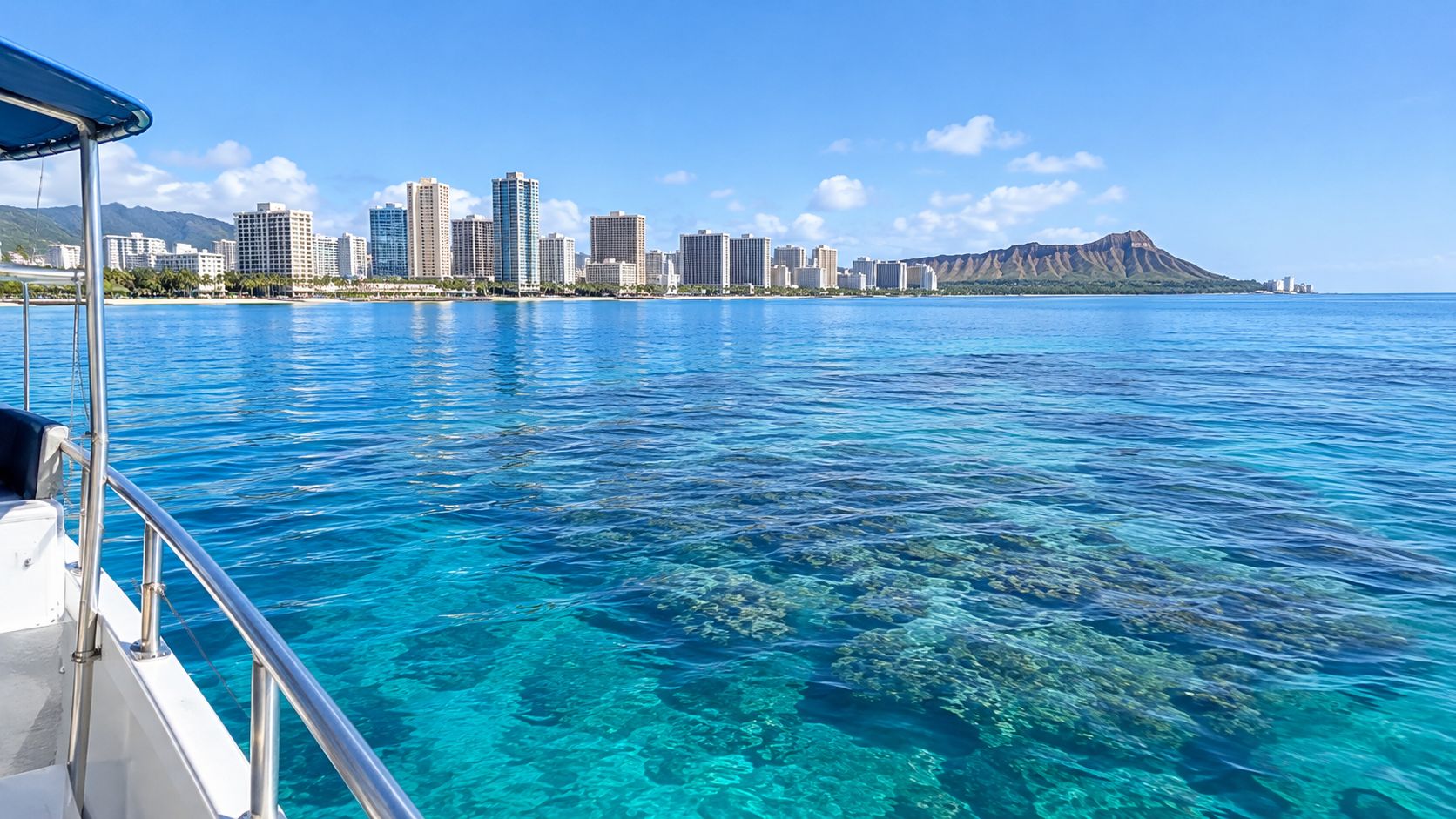
That distinction matters for first-timers. From shore, the reef can look like a manageable target, but the distance is only one concern. Conditions can change, currents can push swimmers off course, and boats need room to maneuver. A guided boat trip replaces that exposed crossing with a supervised ride and a planned entry into the water.
Why boat access is the sensible choice
A boat crew can assess conditions, choose an appropriate approach, and give guests a safety briefing before anyone enters the water. Guides can also keep the group within a designated area and help guests manage their equipment. Those controls matter in an offshore setting, especially for families and people who haven't snorkeled before.
The ride is part of the outing, not just transportation. As the boat leaves the Waikiki shoreline, passengers get a water-level view of the coast and south-shore scenery. For many visitors, that first glimpse of the reef and the skyline from the same deck helps make the setting feel real before they even put on a mask.
Turtle Canyon Honolulu is best understood as a boat-access wildlife experience. The rest of the planning follows from that: knowing why turtles use the reef, what a typical snorkel feels like, and how to make a safe choice for each person in your party.
Why Sea Turtles Gather at Turtle Canyon
Turtle Canyon is known for its natural cleaning-station behavior. Hawaiian green sea turtles, or honu, may pause above the reef while small reef fish pick algae and other material from their shells. The scene is a little like a car wash, except the turtles choose to hover while fish do the cleaning.
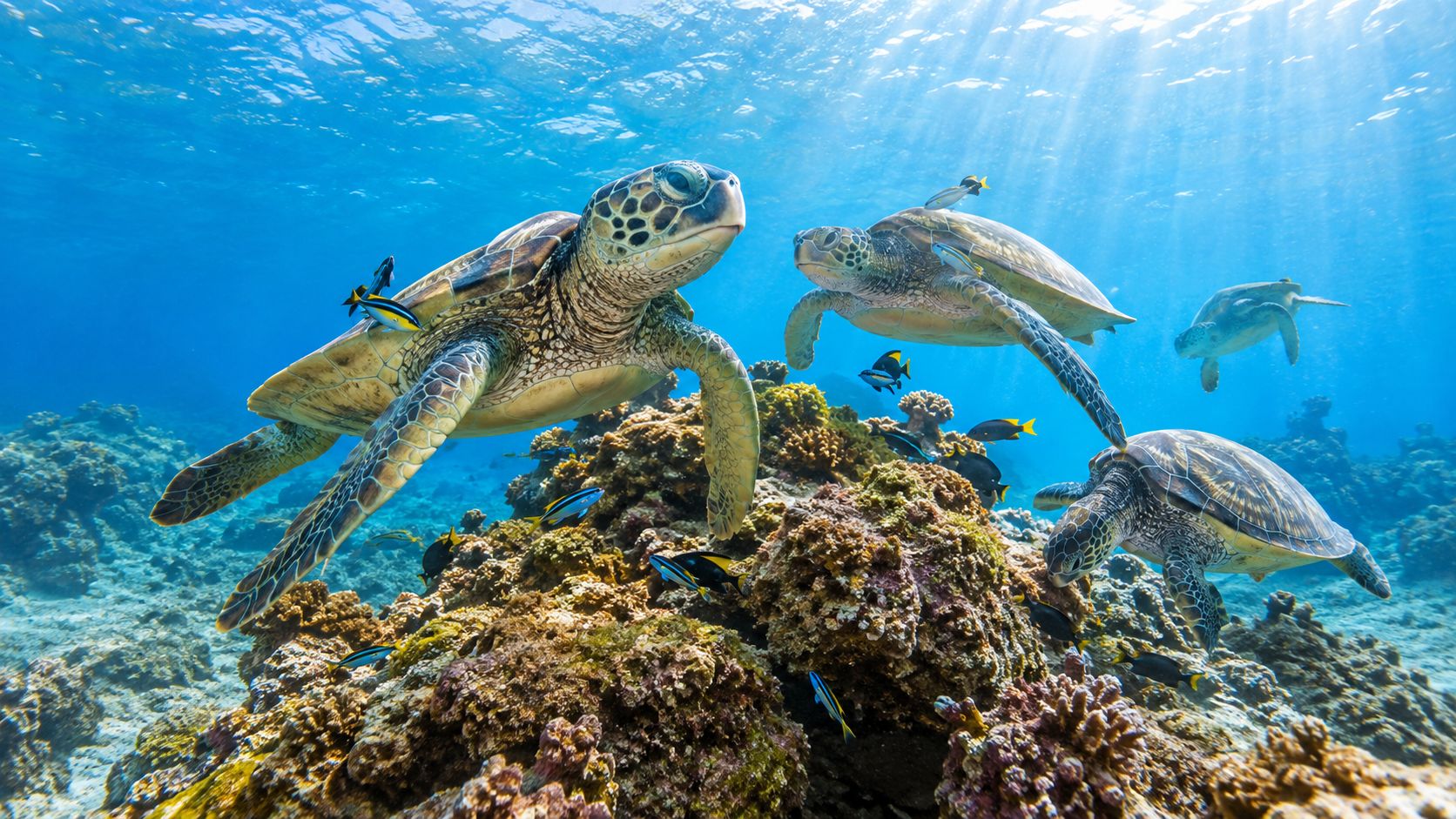
This behavior gives snorkelers a reason to look carefully rather than rush after a passing animal. A turtle at a cleaning station may remain in the area for a while, while another may move between reef features or head off to feed. The reef is part of a larger marine environment used by Hawaiian green turtles for feeding and resting, not a wildlife attraction arranged for people.
The honu population and its protections
Hawaiian green turtles in this region belong to the genetically distinct Central North Pacific population, which is geographically isolated from other green-turtle populations. This population remains listed as threatened under the U.S. Endangered Species Act, and Hawaii state law also protects turtles through Chapter 195D and administrative rules governing protected wildlife. Federal responsibilities are shared by NOAA Fisheries and the U.S. Fish and Wildlife Service, alongside the state's Department of Land and Natural Resources. The Hawaii Division of Aquatic Resources sea turtle overview outlines this conservation context.
There's also reason for hope. Hawaii's nesting abundance has increased by approximately 5% annually over the last two decades, reaching nearly 500 nesting females per year, compared with 67 nesting turtles recorded in 1973. At the same time, the Central North Pacific population still has fewer than 4,000 total nesting females. That combination of recovery and continued vulnerability is why every animal and nearshore feeding habitat matters.
Climate change, sea-level rise, habitat degradation, fishing-line entanglement, light pollution, and disease remain ongoing pressures. For visitors, the practical response is simple: observe passively, follow guide instructions, and keep the reef and turtles undisturbed. For more about the animal itself, see this guide to Hawaiian sea turtles.
What You Will See While Snorkeling at Turtle Canyon
Once you're in the water, the experience often begins with the reef itself. Colorful fish move around the coral, and a guide may point out a turtle resting near the bottom or gliding between cleaning stations. With a mask on, even a calm snorkeler can watch the reef without needing to dive down or chase wildlife.
A turtle may rise toward the surface to breathe. That's a memorable moment, but it's also when swimmers need to stay aware of the animal's route. Leave a clear path upward and don't crowd the turtle as it surfaces. The recommended distance and behavior rules are covered below, and the guide will help position the group.
The supporting cast is busy, too. Reef fish gather around the turtles and move through the water column, sometimes appearing close enough to inspect from the surface. You'll see more by floating steadily and scanning the reef than by kicking hard from one spot to another.
Wildlife on the ride out
The boat ride can bring its own sightings. Spinner dolphins may appear during the transit, and humpback whales frequent these waters between December and April, creating the possibility of a seasonal wildlife bonus. These are wild animals, so sightings aren't guaranteed.
Guests who prefer to stay dry may still spot turtles surfacing from the deck. That can be a good option for someone who wants to enjoy the trip but isn't comfortable entering open water. The important distinction is that being aboard is a valid way to participate, not a lesser version of the outing.
How a Guided Turtle Canyon Snorkel Tour Works
A typical trip starts with check-in at Pier B, 1025 Ala Moana Blvd, near Waikiki hotels. From there, the crew takes guests on a coastal cruise with south-shore views before reaching the reef. That ride out matters more than people realize. It gives the crew time to explain the plan, size up the group, and spot anyone who looks nervous about open water before gear ever goes on.
Before entry, the crew gives a safety briefing and marine-life orientation. Guests receive sanitized premium masks, snorkels, fins, and flotation vests, so there's no need to rent that equipment separately. Pay attention during this part. The crew covers how to clear a flooded mask, where the group will snorkel, and how to enter and exit the boat safely, and the guests who listen closely have a noticeably smoother time in the water.
From check-in to the water
The excursion lasts two hours, with approximately 60 minutes of supervised time in the water. Guides help guests locate wildlife and stay oriented, while the captain and crew manage the vessel and conditions. Trips run year-round, and mornings tend to offer calmer conditions when scheduling allows.
Snorkel Turtle Canyon operates guided excursions from Waikiki to the reef. The company reports turtle sightings on approximately 99% of trips, based on its operating history. Tour details and inclusions can help you compare the trip logistics before you book.
| Trip Detail | What to Expect |
|---|---|
| Departure | Pier B, 1025 Ala Moana Blvd, Honolulu |
| Excursion length | Two hours |
| Supervised snorkeling | Approximately 60 minutes |
| Equipment | Sanitized masks, snorkels, fins, and flotation vests |
| Guest ages | Ages 3 and up, with flotation support |
| Crew support | Safety briefing, marine-life orientation, and in-water guidance |
| Wildlife | Turtle sightings reported on approximately 99% of trips |
A guided boat trip solves more than the transportation problem. It gets guests to an offshore reef they can't safely reach by swimming from shore, provides gear fitted on the spot, and puts trained eyes on the group while everyone is in the water. For a first-timer, that supervision is often the difference between a relaxed snorkel and a stressful one.
Guest feedback for Snorkel Turtle Canyon is available below.
Deciding If Everyone in Your Group Is Ready
A flotation vest helps you stay supported at the surface, but it doesn't turn a non-swimmer into a swimmer or remove the risks of open water. “Beginner-friendly” can describe the gear and guidance available. It can't answer whether each person in your group is ready for the ocean that day.
Before booking, consider each guest individually:
- Water comfort: Can they put their face in the water and breathe through a snorkel without panic?
- Swimming ability: Can they move and stay oriented in water without treating a flotation device as a substitute for swimming skills?
- Health and mobility: Can they safely enter and exit the water with the assistance the crew offers, given their medical or mobility needs?
- Weather tolerance: Are they prepared to stay aboard or skip snorkeling if high surf, strong winds, or currents make conditions unsafe?
- Personal choice: Would they rather watch from the boat than feel pressured to get in?
These are judgment calls, not a pass-or-fail test. Non-swimmers, older adults, and guests with mobility or medical concerns should speak with the operator before the trip and decide whether staying aboard is the better option. A guest who declines water entry can still enjoy the boat ride and watch for turtles surfacing from the deck.
Make the decision before boarding
Guides can explain entry and exit procedures and offer help, but they can't make ocean conditions predictable or remove the need to communicate clearly about comfort and ability. Tell the crew what support a guest may need before the group reaches the reef. If someone doesn't feel ready once the boat arrives, there should be no pressure to follow everyone else into the water.
Trips accommodate children ages 3 and up with flotation support, but age alone doesn't determine readiness. A child still needs close supervision and the confidence to follow simple instructions around water. The same principle applies to adults: choosing to stay aboard is a responsible decision, not a failed attempt at the activity.
A short excursion can make people feel they should participate because the group has limited time. Resist that pressure. A clear conversation before booking is better than discovering at the reef that someone is anxious, unwell, or unable to manage the conditions.
Snorkeling Rules That Protect Hawaiian Sea Turtles
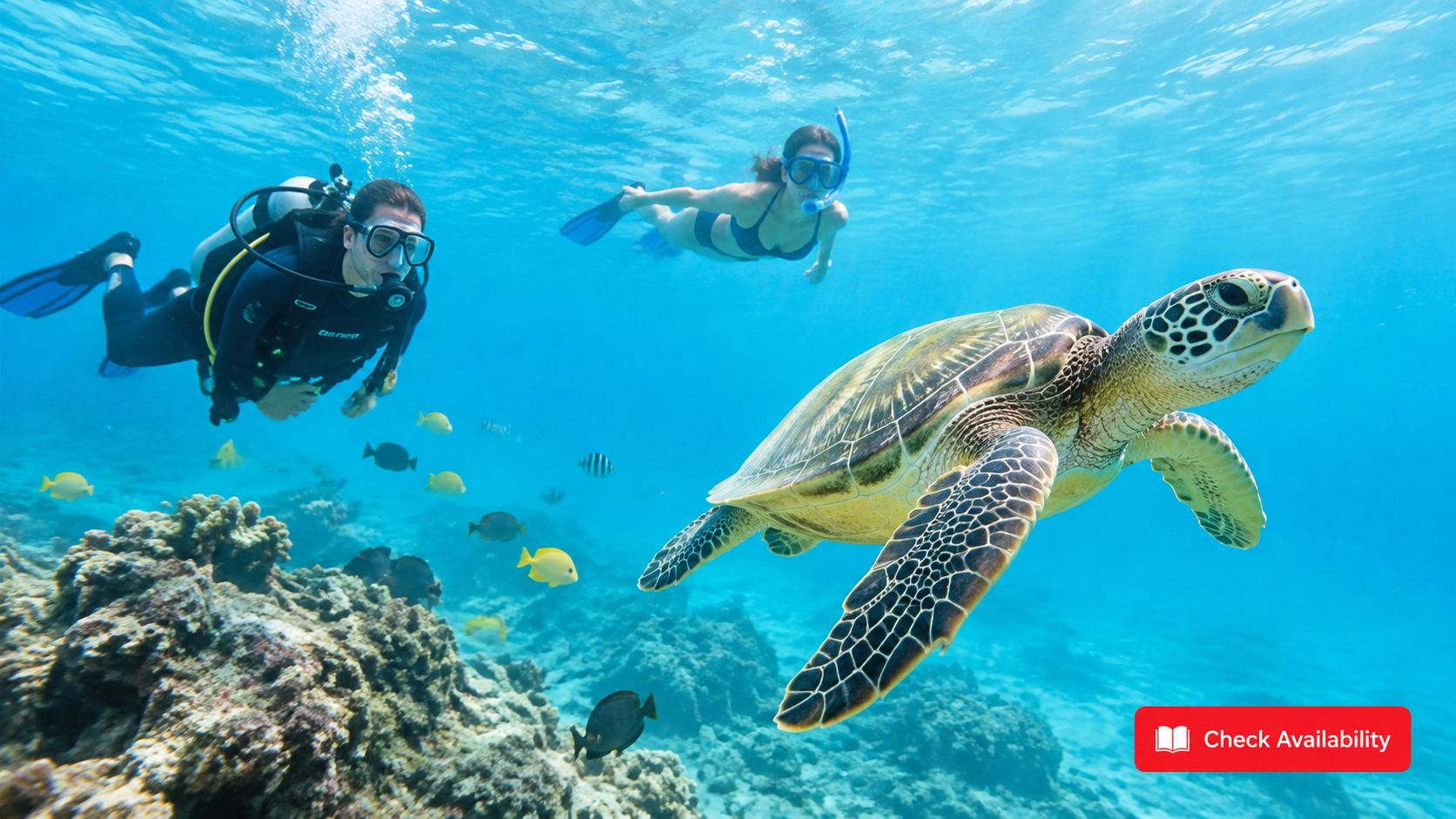
Keep at least 10 feet (3 meters) between yourself and a Hawaiian green sea turtle in the water or on shore. NOAA and the Hawaii Division of Aquatic Resources recommend this separation because close approaches can disrupt normal behavior and cause stress. Their Hawaii marine wildlife viewing guidelines emphasize responsible viewing.
Distance is only part of the rule. If a turtle changes direction, dives repeatedly, accelerates away, or otherwise appears disturbed, give it more space immediately, even if you believe you're still outside the recommended buffer. The Hawaii DLNR wildlife guidance also cautions that actions capable of disturbing a turtle's natural behavior may violate federal or state protections.
What respectful viewing looks like
Never touch, chase, feed, restrain, ride, or pursue a turtle for a photograph. Don't block its route to the surface, where it needs to breathe. Feeding can also teach turtles to associate boats and people with food, changing how they behave around visitors.
Instead, let the turtle set the pace. Stay still when it approaches, take photos without following, and leave its path open. If it moves away, let it go. Your guide may position themselves between swimmers and a turtle when needed, and you should follow their directions rather than crowding in for a closer look.
Protect the reef while you're floating above it. Keep your body horizontal, use gentle fin movements, and avoid kicking or standing on coral. On the boat, listen during approach and departure, stay seated or stable when instructed, and enter or exit only when the crew says it's safe.
Vessel behavior matters, too. Hawaii DLNR's marine wildlife vessel protocol advises reducing speed to 5–10 knots near shallow reefs, harbors, and boat launches, shifting into neutral if a turtle appears in front of a vessel, and following required no-wake speeds within 200 feet of shore. These are operational measures for boat crews, but passengers help by following crew instructions and keeping clear of the vessel's working area.
What to Bring and How to Book Your Trip
The crew provides masks, snorkels, fins, and flotation vests, so leave those at home. Pack for sun, salt water, and the ride back: wear your swimsuit under your clothes, bring a towel, and carry a hat and sunglasses for the cruise. Apply reef-safe mineral sunscreen before boarding, and bring a waterproof phone pouch or camera if you want photos.
If you're prone to seasickness, plan ahead with a remedy that's appropriate for you. Morning departures usually offer calmer water and better visibility, and trips operate year-round. Between December and April, the transit also brings the chance of seeing humpback whales.
Use this Honolulu activity guide to fit the excursion into your plans, then check the forecast and discuss any swimming, health, or mobility concerns with the operator before reserving. The right trip is the one where each person knows what to expect and feels comfortable with their choice, whether that means snorkeling or staying aboard.
Snorkel Turtle Canyon offers guided boat excursions from Waikiki with provided snorkel gear, crew guidance, and a chance to observe honu respectfully at their offshore reef habitat. Review the readiness checklist, choose the option that suits everyone in your group, and visit Snorkel Turtle Canyon to plan your trip.