
You're standing on a crowded Waikiki beach, scanning the waves for a dark shell. So far, you've spotted surfboards, swimmers, and not much else. It's easy to assume Oahu's turtles are hard to find when the main challenge is choosing a beach that matches the encounter you want.
Hawaiian green sea turtles, known locally as honu, rest on sand, graze along reef edges, and swim through sheltered coastal water. Finding them takes patience, but it doesn't always require getting wet. Searches for “Turtle Beach Oahu” usually lead to Laniakea on the North Shore, which is different from Turtle Canyon, the shallow offshore reef near Waikiki that you can't safely reach from shore.
For free shore viewing, start with Laniakea. For a guided underwater encounter, consider Turtle Canyon. The other places below work best when they fit your existing plans. These are practical recommendations, not measured sighting rankings, and no wild turtle encounter is guaranteed.
Table of Contents
- 1. Laniakea Beach (Turtle Beach), North Shore
- 2. Hale'iwa Ali'i Beach Park, Haleiwa
- 3. Kuilima Cove, Turtle Bay Resort Area
- 4. Ko Olina Lagoons, Kapolei
- 5. Hanauma Bay Nature Preserve, Hawaii Kai
- 6. Ala Moana Beach Park, Honolulu
- 7. Turtle Canyon off Waikiki, Guided Boat Snorkel
- How the Top Oahu Turtle Viewing Spots Compare
- Choosing the Right Turtle Spot for Your Oahu Trip
1. Laniakea Beach (Turtle Beach), North Shore
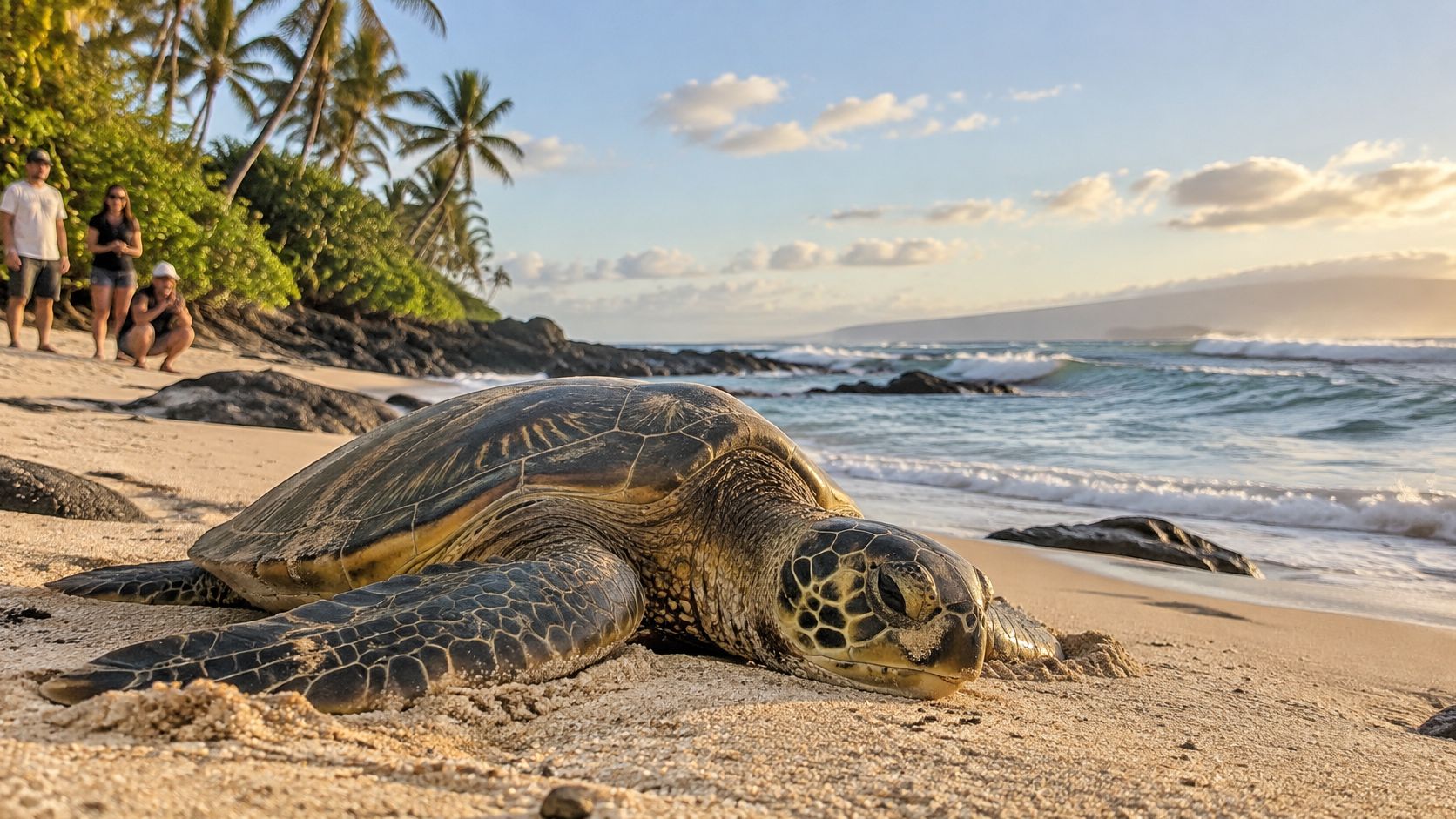
Best choice for dedicated shore viewing. Laniakea earns the first stop because you can watch resting honu without committing to a swim. Look along the sand, including the northern end, and scan the shorebreak without walking toward any turtle coming ashore.
The beach sits along Kamehameha Highway near Haleiwa. Viewing is free, but getting there from Waikiki costs driving time, fuel, and patience with traffic and parking. Arriving early can make access easier; it doesn't guarantee turtles will be resting on the beach.
Watch from the sand, not the shorebreak
The Oahu Travel Guide's Turtle Beach overview describes a rocky shoreline, shorebreak, and a rip current on the west side. That makes this a turtle-viewing stop first, not a beginner snorkeling recommendation.
NOAA Fisheries' Hawaii wildlife-viewing guidelines recommend staying at least 10 feet, or 3 meters, from sea turtles on land and in the water. Apply that minimum throughout your trip, and give more room whenever a turtle needs space.
Practical rule: A turtle on the sand is resting, not posing. Use your camera's zoom instead of closing the gap.
For a family North Shore outing, stop here before lunch in Haleiwa. Our Hawaiian turtle guide offers more context for recognizing and respectfully observing honu. Bring sun protection, carry out your trash, and leave any marked viewing boundary undisturbed.
2. Hale'iwa Ali'i Beach Park, Haleiwa
Best backup for a North Shore day. Choose Hale'iwa Ali'i Beach Park when you want a flexible turtle look rather than a trip built entirely around a sighting. Honu may appear in the water or rest along the shore, but don't expect a turtle to be waiting beside the path.
The park is near Haleiwa's harbor area. Don't confuse it with every shoreline access around Anahulu Stream; choose your destination carefully rather than wandering along working harbor edges looking for wildlife.
For visitors already heading into Haleiwa for food or shops, the added effort is modest. Shore viewing is free, while transport, parking arrangements, and lunch remain separate expenses.
Make the stop worthwhile without a sighting
Say you've checked Laniakea and haven't seen a turtle. Continue into Haleiwa, enjoy the park, and scan the water from a safe shore position before heading to lunch. Polarized sunglasses help reduce surface glare, particularly when you're trying to distinguish a shell from submerged rock.
- Viewing expectations: Treat this as a worthwhile secondary stop, not a more dependable replacement for Laniakea.
- Water decisions: Check surf and local advice before swimming. Quiet-looking water near a harbor isn't an invitation to enter boat channels.
- Turtle space: Keep the same 10-foot minimum, and step farther back if a turtle approaches or heads toward the sea.
The Hawaii DLNR guidance on basking honu specifically addresses Aliʻi Beach and Laniakea and warns against touching, feeding, pursuing, or pushing turtles into the ocean. A resting turtle doesn't need help getting back into the water.
3. Kuilima Cove, Turtle Bay Resort Area
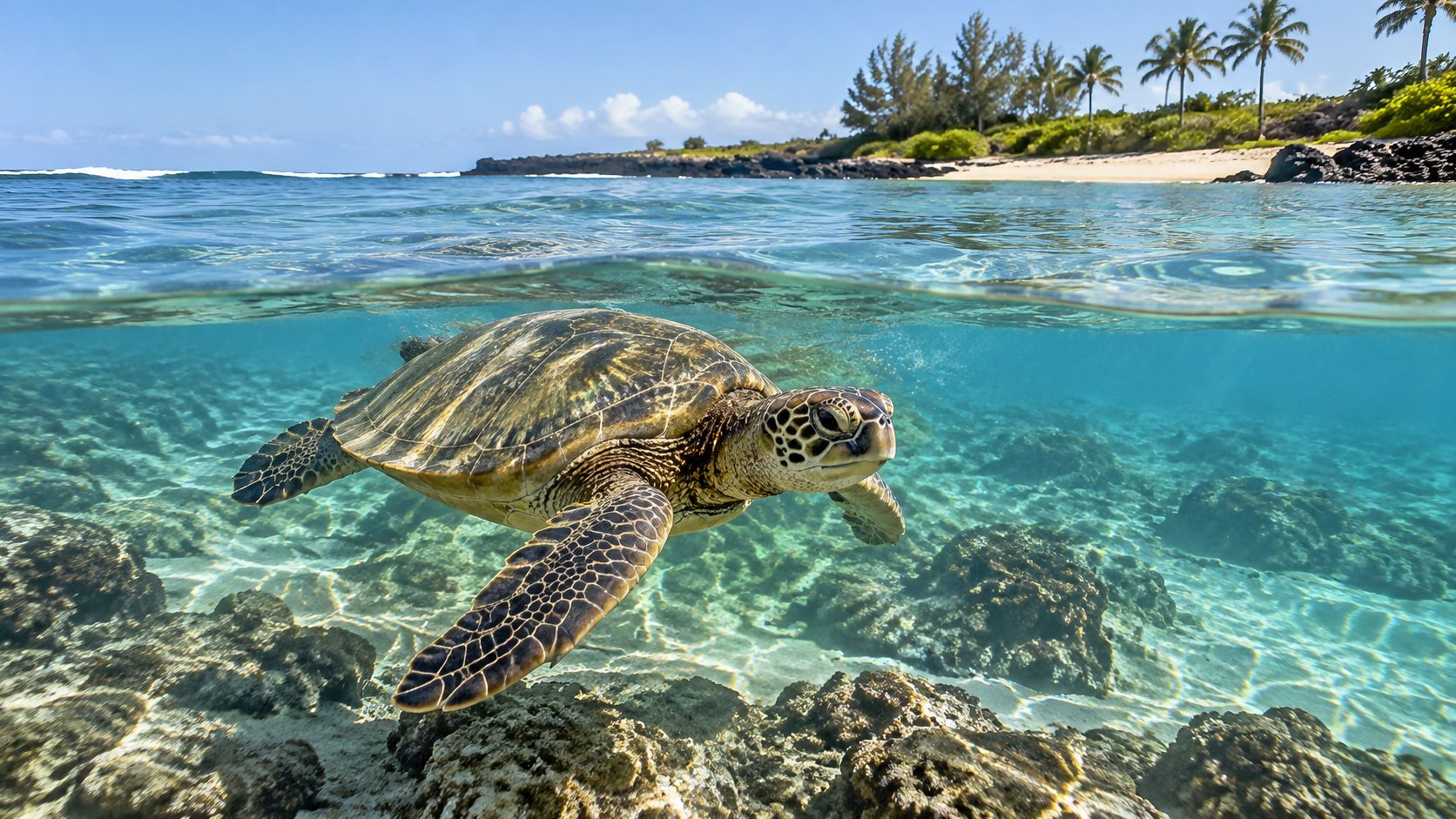
A sheltered cove can look reassuring after driving past open North Shore surf. Kuilima Cove, near the Turtle Bay resort area, offers reef habitat where turtles may feed, but shelter doesn't make every day suitable for snorkeling.
Best for a beach outing with a possible underwater sighting. I'd choose Kuilima because the cove fits the day's plans, not because the Turtle Bay name promises turtles. Laniakea is the stronger recommendation if seeing a resting honu is your main purpose.
Balance the long drive against the beach time
Shore viewing is free, but the journey from Waikiki is a substantial commitment compared with an in-town beach visit. Confirm current public access and parking arrangements with resort staff before settling into your plans, and don't assume resort parking is free.
For a couple already exploring the northeast coast, a beach stop and a cautious look along the reef can make sense. For a family making a special trip solely for turtles, the uncertainty is harder to justify.
Shelter is relative. Judge the water you're looking at, not the word “cove” on the map.
Snorkel with a buddy, use flotation if needed, and stay within your swimming ability. Keep at least 10 feet from turtles, never stand on coral to steady yourself, and don't position yourself across a turtle's route through the cove.
If conditions aren't comfortable, stay ashore. Wading farther out won't necessarily improve your odds and can leave you struggling on uneven reef.
4. Ko Olina Lagoons, Kapolei
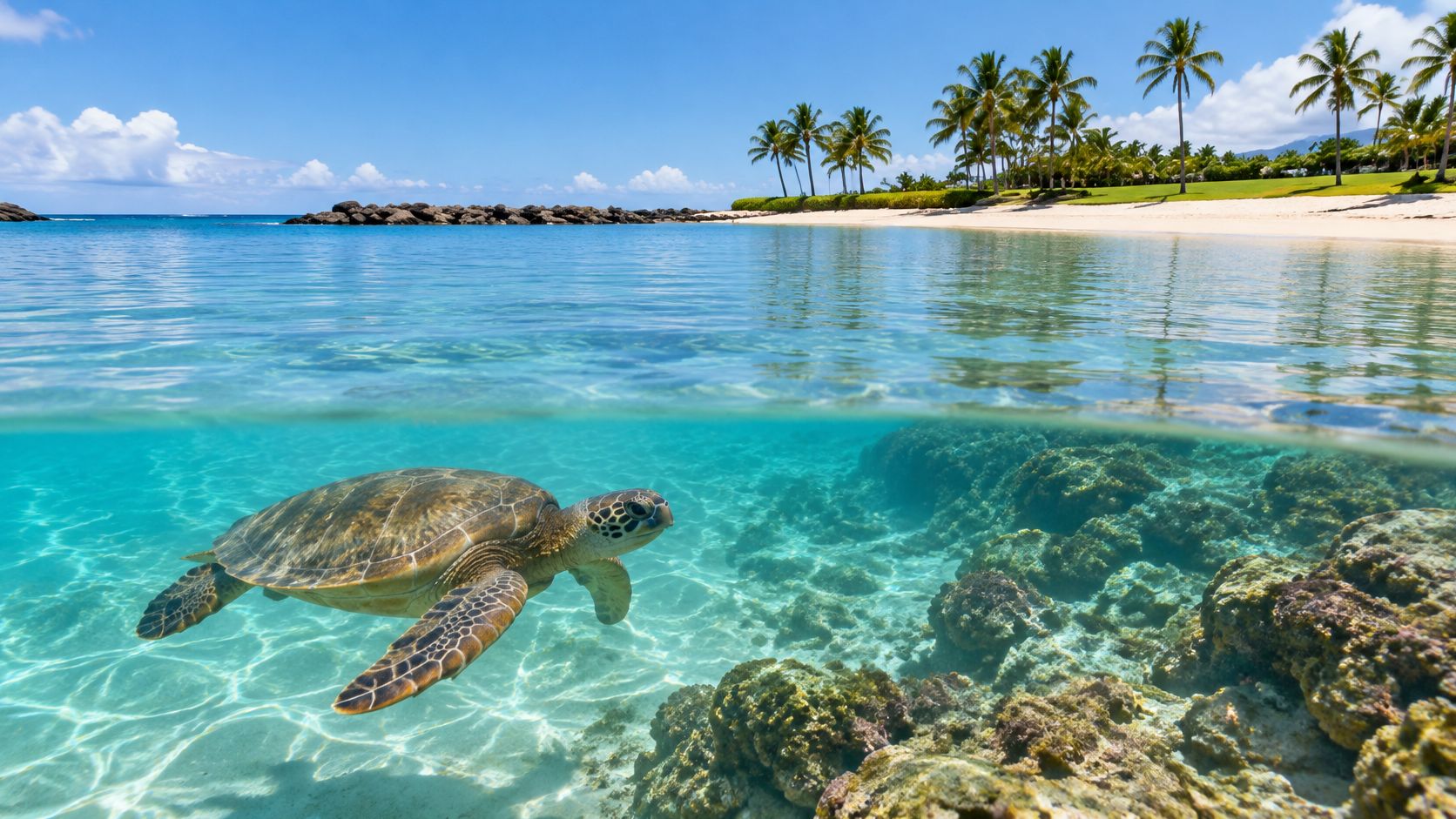
Best for a family beach day where turtles are a bonus. Ko Olina's man-made, reef-protected lagoons offer a different experience from the North Shore. The setting can be comfortable for a relaxed outing, but occasional turtle visits shouldn't be the reason you drive across the island.
A turtle may move through lagoon water or near the outer reef. That doesn't mean you should swim toward an opening, climb onto a barrier, or leave the sheltered swimming area to follow it.
Keep the outing inside the lagoons
For a family staying in Kapolei, this is an easy addition to an existing beach day. For visitors based in Waikiki, travel and public parking availability add effort, even though shore viewing itself is free. Resort services, equipment rentals, and private parking can add separate costs.
- Start with conditions: A morning visit may make parking and beach setup easier, but inspect the water before deciding to snorkel.
- Look without pursuing: A mask can help you observe within a safe swimming area. Don't search progressively farther offshore.
- Leave room: Maintain the same 10-foot turtle buffer and avoid surrounding an animal with swimmers.
A useful plan is to enjoy the lagoon, have lunch, and take a coastal walk before heading home. If a turtle appears, pause and let it pass rather than turning the family swim into a chase.
Compared with Laniakea, Ko Olina is a less targeted turtle stop. Compared with an exposed reef entry, it can be a more practical place to enjoy the beach while keeping expectations modest.
5. Hanauma Bay Nature Preserve, Hawaii Kai
Best for visitors who value the whole reef experience. Hanauma Bay belongs on a snorkeling itinerary because of its habitat and reef fish, with a possible turtle encounter as an added benefit. Don't book it expecting a dedicated turtle-viewing session.
This protected bay has regulated access, education requirements, and entry rules. Check current reservation availability, admission requirements, opening arrangements, and parking before leaving Waikiki. Unlike an informal shore stop, a visit takes advance planning and may involve admission and parking costs.
Reserve for the reef, not a promised turtle
Say your group wants to snorkel even if no honu appears. Hanauma Bay can be a sensible choice because you're still there to observe fish and reef habitat. If someone only wants to see turtles without swimming, Laniakea is a more direct match.
Our overview of sea turtle tours and viewing options can help you distinguish a general reef visit from a turtle-focused offshore outing.
Reef etiquette: If you need to stand, find an appropriate sandy area. Coral isn't a platform for adjusting your mask.
Keep at least 10 feet from turtles, and don't follow one into water beyond your ability. Avoid gathering with other snorkelers around a feeding animal, especially where the reef limits its escape route.
The Hawaii Division of Aquatic Resources sea-turtle guidance explains that Hawaiian green sea turtles are protected under federal and state law. Conservation here depends on ordinary visitor choices: staying off coral, leaving wildlife alone, and following the preserve's instructions.
6. Ala Moana Beach Park, Honolulu
You've got a free morning in Honolulu, but not enough time for a North Shore drive. Ala Moana Beach Park is the practical low-effort option, especially if a beach walk would be worthwhile even without a turtle.
Best for convenience, not dependable sightings. Honu occasionally appear in nearshore water and around reef habitat. From shore, look for a head surfacing to breathe rather than assuming every dark patch is a shell.
The park's location near Magic Island makes it easy to combine with other things to do in Honolulu. Shore viewing is free, and you can keep the visit short without feeling that you've wasted a cross-island journey.
Don't turn an easy outing into an offshore search
Reef edges and deeper water may attract marine life, but they also demand more from swimmers. Don't swim farther out because someone points to a possible turtle. Check conditions and lifeguard advice before entering.
- Useful equipment: Polarized sunglasses are enough for a shore search. You don't need to rent snorkel gear just to look.
- A realistic use case: Pair a calm-morning walk with breakfast or a park picnic, treating any sighting as a bonus.
- The same boundary: Stay at least 10 feet away, don't touch, and leave a clear route if a turtle moves toward shore.
Compared with Ko Olina or Kuilima, Ala Moana usually asks less travel effort from Waikiki visitors. Its weakness is the uncertainty: it's a convenient place to look, not a reason to abandon a more focused turtle plan.
7. Turtle Canyon off Waikiki, Guided Boat Snorkel
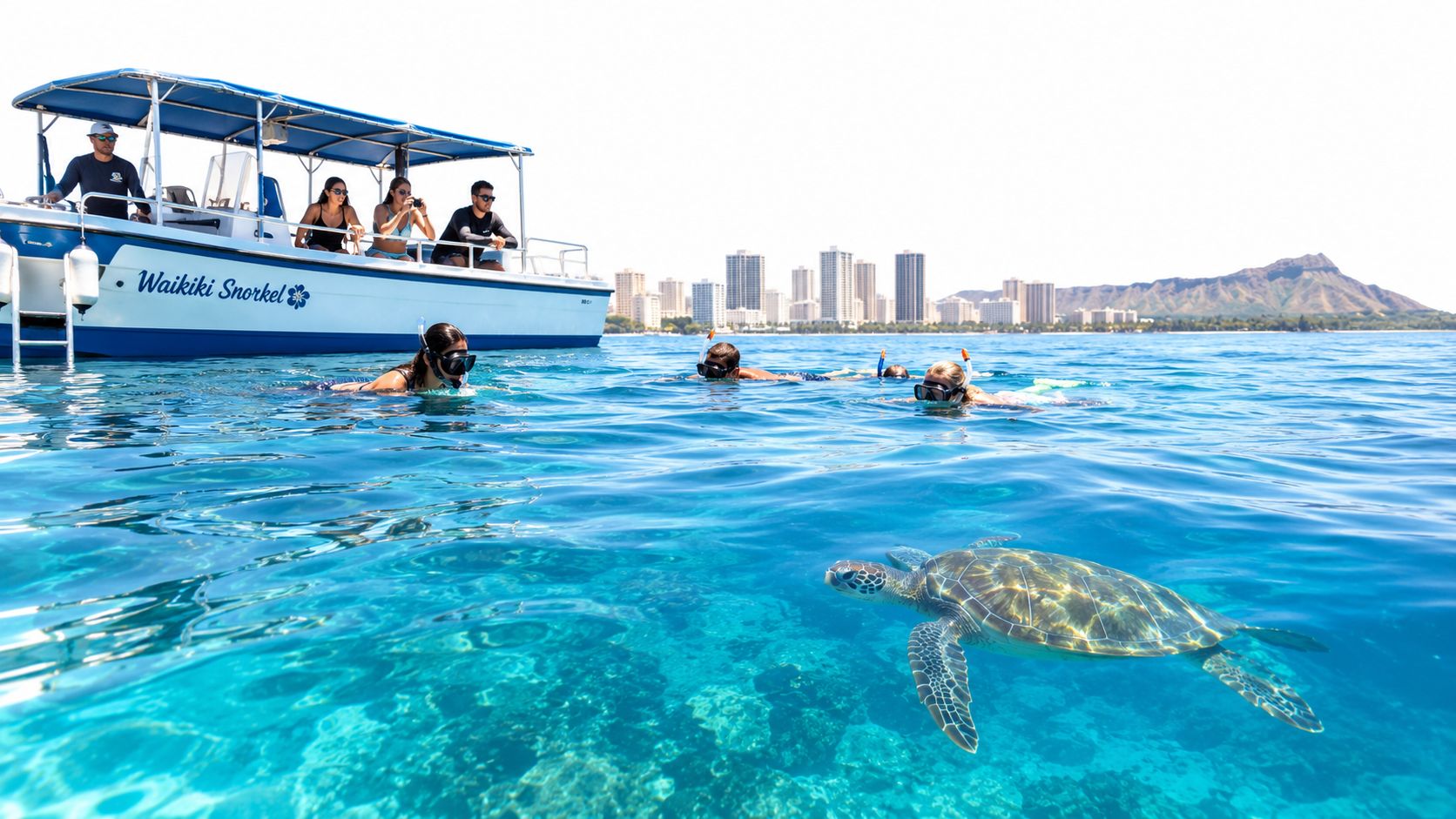
Best for a focused underwater encounter from Waikiki. Turtle Canyon is offshore, not a beach entry, and you can't safely swim there from shore. It offers deeper water, better visibility, and a higher likelihood of turtle sightings than snorkeling directly from Waikiki Beach.
The Turtle Canyon geological overview describes a reef shaped by coral growth, erosion, and changing sea levels. Ledges, hard reef surfaces, and sand patches create varied habitat rather than a flat swimming area.
Trade a fare and fixed departure for guided access
For a beginner who wants to see turtles underwater, the useful difference is supervision, not just transport. At Snorkel Turtle Canyon, we explain turtle-interaction rules before departure and guide guests to give animals space.
A family with limited vacation time avoids a speculative beach search, but must still be comfortable with a boat outing and offshore water. Flotation helps; it doesn't replace listening to the crew or clearly describing your swimming ability.
Our rule is to stay at least 10 feet away, never touch or chase turtles, and allow natural movement. If a turtle approaches, don't reach toward it or kick after it.
Review the Turtle Canyon snorkeling trip details before choosing your date. Bring a swimsuit, towel, reef-safe sunscreen, and sun protection, and favor a morning departure when it fits your schedule.
How the Top Oahu Turtle Viewing Spots Compare
| Item | Drive from Waikiki | Access Type | Best For |
|---|---|---|---|
| Laniakea Beach (Turtle Beach), North Shore | About 45 minutes to 1 hour | Shore access; limited roadside parking | Seeing turtles from the beach |
| Hale'iwa Ali'i Beach Park, Haleiwa | North Shore drive; travel time varies | Beach park access | Families and a relaxed Haleiwa visit |
| Kuilima Cove, Turtle Bay Resort area | Longer drive to Oahu's northeast coast | Sheltered cove; check access and parking rules | Beginner snorkelers and shallow-water viewing |
| Ko Olina Lagoons, Kapolei | About 40 minutes | Public lagoons with resort-area facilities | Families and calm, clear water |
| Hanauma Bay Nature Preserve, Hawaii Kai | Southeast coast drive; travel time varies | Regulated access; reservations and fees typically apply | Reef viewing and conservation-focused snorkeling |
| Ala Moana Beach Park, Honolulu | Short drive from Waikiki | Urban beach park with facilities | Convenient beach access near Honolulu |
| Turtle Canyon off Waikiki, Guided Boat Snorkel | Minimal transfer; departs near Waikiki | Guided boat snorkel from Pier B | Guided offshore snorkeling with a high chance of turtle sightings |
Choosing the Right Turtle Spot for Your Oahu Trip
Choose the encounter first, then the location. If you want to watch from dry sand, Laniakea is the clearest starting point, with Hale'iwa Ali'i Beach Park a useful nearby addition. If you mainly want a beach day, Kuilima Cove and Ko Olina make more sense when they're already close to your route.
Free shore viewing isn't the same as a cost-free outing. A rental car, fuel, parking, equipment, and a long drive can matter more than admission. Ala Moana keeps those commitments low for Honolulu visitors, while Hanauma Bay requires more planning but offers a worthwhile reef visit even without a turtle sighting.
When a guided offshore trip makes sense
Turtle Canyon is the strongest choice here for a focused underwater encounter. We see Hawaiian green sea turtles on approximately 99% of our trips, based on our operating history, but wildlife sightings still aren't a guarantee. Our crew's rule remains the same wherever an animal appears: no touching or chasing, and at least 10 feet of space.
Our Turtle Canyon Snorkel Adventure costs up to $109 for a 2-hour trip, with approximately 60 minutes of snorkeling, equipment, flotation support, and crew guidance included; it's open to guests ages 3 and up. Our office and departure location are at 1025 Ala Moana Blvd, Pier B, Honolulu, HI 96814.
Book early if you need a particular date or have a short island stay, since we offer a limited number of spots each day. Most of all, pick an outing that fits everyone's comfort level. Watching a honu peacefully from shore is a better experience than entering water you aren't ready for.
We provide guided boat access to Turtle Canyon, with snorkeling equipment, flotation, and crew support for observing honu and reef fish off Waikiki. Visit Snorkel Turtle Canyon to choose a departure that fits your Oahu plans and prepare for a respectful offshore encounter.