
You've driven to the North Shore, parked near Turtle Bay Resort, and you're standing on the sand with a rental mask in one hand and a phone weather app in the other. The water looks blue, a turtle photo from someone else's trip looks easy, and you're trying to decide if today is a swim day or a day you're about to get pushed around by surf you didn't expect. That moment is where good Turtle Bay snorkeling starts, not in the water.
Think of Turtle Bay as a summer-cove decision, not a year-round turtle guarantee. On a flat morning, Kuilima Cove can be a gentle first snorkel with reef fish close to shore. On a winter swell day, that same cove can turn into shore break, surge, and a hard exit, and the smart move is to walk the beach instead. You'll make a better call if you learn to read the cove mouth, match your dates to the season, and keep a south shore backup in your pocket for the weeks when the North Shore says no.
Table of Contents
- Where to Snorkel Around Turtle Bay
- When the North Shore Is Actually Swimmable
- How Beginners Enter Kuilima Cove
- How to Watch Honu Without Crowding Them
- A Calm Morning Versus a Closed Cove
- South Shore Options When Turtle Bay Is Rough
- Choose the Water That Matches Your Dates
Where to Snorkel Around Turtle Bay
Pull into Turtle Bay Resort and it's tempting to treat any blue water in front of you as a snorkel site. Don't. The practical swim here is Kuilima Cove, the small sandy pocket beside the resort on Oahu's North Shore, and it's a shore entry, not an offshore canyon you boat to. That one correction changes everything about your planning, because a shore entry lives or dies on today's surf at the beach where you're standing.
Start with Kuilima Cove as your default. It has a sandy step-in and a shallow inner reef, so families and first-timers can wade out, float, and keep the swim short on light summer mornings. You don't need to cross exposed rock to get started, and you can turn around early without a long swim back. For most visitors, it's the only Turtle Bay spot that makes sense on a first morning.
Read the Table Like a Forecast, Not a Postcard
Use the table below the way a guide uses a morning surf check. Find today's swell first, then match it to a row. If your row's cancel condition is already happening in front of you, that spot is out, even if you drove a long way to reach it.
Turtle Bay area snorkel entries by season and skill
| Spot | Best season | Entry | Best for | Cancel if |
|---|---|---|---|---|
| Kuilima Cove | May to September | Sandy step-in, shallow inner reef | Beginners, families, short swims | North swell is breaking across the cove mouth |
| Kawela Bay | Calm summer days | Beach entry, patchy rock and coral | Confident beginners who can swim farther | Wind chop or a long shore break blocks the exit |
| Outer reef off Turtle Bay Resort | Small summer mornings only | Swim out from the beach to deeper reef | Intermediate swimmers | Any noticeable current or overhead surf |
| Shark's Cove | June to September | Rocky entry inside the cove | Intermediate snorkelers | It is outside the summer calm window or the cove is surging |
| Three Tables | June to September | Rocky shelves and a longer swim | Intermediate snorkelers | The same north swell that closes Shark's Cove |
Kawela Bay, a short walk west, is a wider crescent with patchy rock. It asks more of you than Kuilima does, because you swim farther before the bottom gets interesting. That's fine for a confident beginner on a calm day, but it's a poor pick for a nervous first-timer who wants fish right away and sand underfoot.
The outer reef in front of the resort is a different category. It's only for stronger swimmers on small, clean mornings, because you're leaving the sheltered pocket and committing to a longer swim out and back. If you feel current along the rocks or see surf standing up outside, you're done. Curiosity isn't a safety plan.
The Pupukea Spots South of the Resort
About 15 to 20 minutes south, Shark's Cove and Three Tables sit in the Pupukea Marine Life Conservation District. They hold richer lava-rock habitat than Kuilima's inner sand and reef, with cracks, shelves, and pockets where fish gather. That richness comes with a stricter calendar. Both spots are calm-season swims for intermediate snorkelers, and both turn dangerous when north swell arrives.
Readers often confuse Turtle Bay with other turtle-named beaches on Oahu, so it's worth checking how Turtle Beach on Oahu differs from the Turtle Bay area before you set your navigation. Similar names don't mean similar entries, and showing up at the wrong shoreline with the wrong expectations wastes your best morning light.
Hawaiian green sea turtles, called honu, can show up at any of these shorelines, but a sighting is never owed to you. The Hawaiʻi Department of Land and Natural Resources notes that turtles can be seen from shore or from a boat because they must surface to breathe, and it warns that approaching or harassing a sea turtle is unlawful. Don't chase an animal or try to get close for a photo.
Judge the spot by the exit you'd have to swim, not by the entry you'd like to make.
If you have only one calm morning, pick the Kuilima Cove row. It's the shortest swim, the easiest entry, and the easiest place to quit early with a good experience instead of a rescue story.
When the North Shore Is Actually Swimmable
The North Shore is a summer pond and a winter stadium. Same coastline, two completely different oceans. From roughly May through September, trade-wind mornings can leave Kuilima Cove flat enough for a mask and fins, with clear water over the inner reef and a sandy lane you can walk in and out of. That's your Turtle Bay snorkeling window, and it's narrower than most vacation photos suggest.
From about November through March, and often into April, northwest swell wraps into the same cove. A knee-deep entry becomes shore break that knocks you off balance, surge that pushes you toward rock, and an exit that's harder than the swim itself. The water also turns cloudy, so even a strong swimmer who forces an entry usually gets a murky, tiring session instead of fish and turtles.
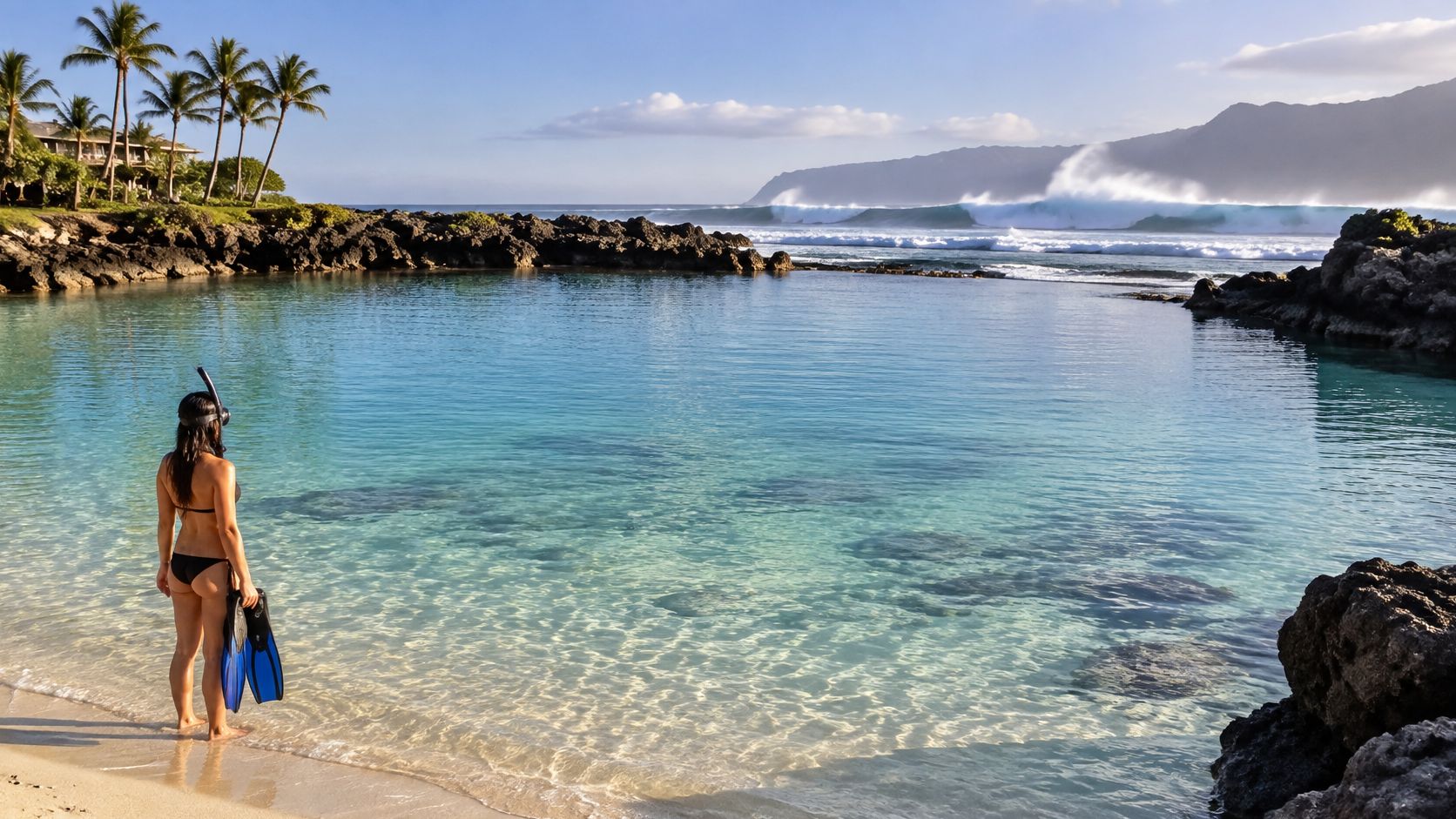
Judge the mouth of the cove, not the pool at the resort and not yesterday's photos. Stand where you can see the opening and spend a few quiet minutes watching sets roll through. A set is a group of larger waves, and the calm gap between sets can fool you into thinking the whole morning will stay that gentle.
What a Usable Morning Looks Like
- Clear sandy entry: You can see sand underfoot and walk in without waves hitting your thighs hard enough to stagger you.
- Little whitewater on the reef: The reef at the mouth stays mostly quiet, with no lines of foam breaking across the opening.
- Easy swim back: Nothing pulls you sideways along the rocks, and returning to the beach looks as simple as leaving it.
A closed morning looks like the opposite. Waves break across the opening, the water turns brown or foamy, or a current slides along the rocks. Any one of those signs is enough. You don't need all three to call it.
Summer isn't automatically safe, either. Afternoon wind can stack chop on water that was glassy at sunrise, and that chop makes breathing through a snorkel tiring for beginners. The useful window is the first hours after sunrise, before the trades build and before crowds stir up the sand. Plan backward from that window, with gear sorted the night before.
Winter visitors should treat a brown, foamy cove as a walk-and-watch day. Hawaiian green sea turtles sometimes rest on this shoreline, so the beach is still worthwhile even when swimming is a bad idea. You can have a memorable morning watching the surf and scanning the sand from a respectful distance, and you'll keep your energy for water that suits a mask.
Three Checks Before Anyone Gears Up
- Look at the cove mouth for a full set cycle, not a quick glance.
- Ask resort staff what the surf did overnight and whether it's building or dropping.
- Leave the water if the exit looks harder than the entry did, because conditions rarely improve once you're tired.
How Beginners Enter Kuilima Cove
This routine assumes a calm summer morning, the kind where the cove mouth passed your checks. If it didn't, the routine doesn't apply. No entry technique fixes the wrong day, and beginners get hurt when they try to technique their way past surf.
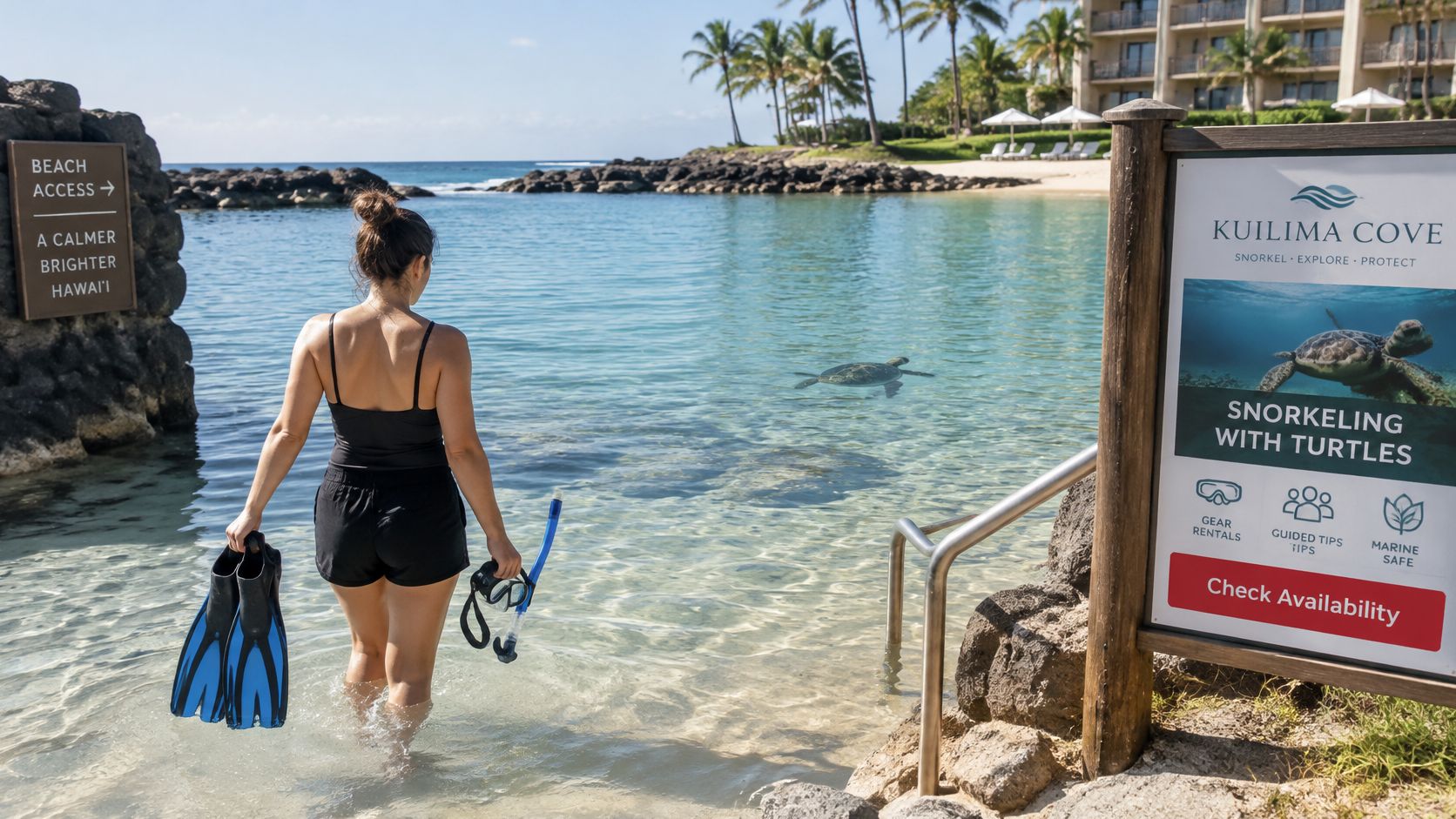
The Five-Step Entry Routine
- Rent and test your gear on dry land. Rent a mask, snorkel, and fins at or near the resort if you didn't bring them. Press the mask to your face without the strap, inhale gently through your nose, and check that it stays put. A mask that leaks on the beach will leak worse in the water, and fixing it there costs you calm breaths.
- Sort sun protection before you get wet. Put on a rash guard or long-sleeve swim shirt first, because fabric doesn't wash off. The National Park Service guidance on protecting yourself and the reef recommends mineral sunscreen containing zinc oxide or titanium dioxide, preferably without nanoparticles and not in spray form, and Hawaiʻi's statewide sunscreen law took effect on January 1, 2021. Don't assume a reef-safe label alone is a regulated guarantee. Read the ingredient list, choose a non-nano lotion, and apply it before you walk to the water so it bonds to skin instead of rinsing straight onto the reef.
- Enter on the sand, fins in hand. Walk out through the sandy lane until the water reaches your waist and you can float. Then sit back, slip your fins on in the water, and roll onto your belly. People who put fins on at the waterline trip, stumble backward onto rock, and start their swim rattled.
- Stay inside the sheltered inner water. Breathe slowly and keep your kicks small. Your goal is a short loop over sand and inner reef, not a push toward the exposed outer reef because the fish looked closer out there. Turn back while the swim to shore still feels easy, not when you're already tired.
- Exit the same sandy lane. Swim in until you can stand, then remove your fins while you're still floating. Watch for small shore break on the way in, because a knee-high wave can dump a tired beginner face-first into the sand.
The Slips That Ruin First Trips
Most bad first snorkels follow a short script. Fins go on too early. Someone swims toward the exposed reef because the water looked clearer farther out. The group stays in after the wind picks up because nobody wants to be the one who calls it. Each slip is small, but together they turn a gentle cove into a long, tiring swim home.
- Weak swimmers: Use flotation. A vest or belt is reasonable equipment, not an admission of failure, and it lets you rest without standing on reef.
- Children: Keep them in the inner cove with an adult within arm's reach the whole time.
- Nervous adults: Practice breathing through the snorkel while standing in waist-deep water before you swim anywhere.
If you're comparing a shore start like this with boat-based options, the overview of sea turtle tours and how guided swims are structured helps you see what changes when a crew handles entry for you. Either way, this shore routine belongs only to the calm-season row for Kuilima Cove. It isn't a plan for Shark's Cove or the outer reef, where rock, depth, and exposure demand more skill.
How to Watch Honu Without Crowding Them
Treat a turtle sighting as a privilege with a rule attached. Hawaiian green sea turtles belong to the Central North Pacific population, and the Hawaiʻi Division of Aquatic Resources sea turtle page records that only 67 nesting turtles were recorded in 1973, whereas nearly 500 females now nest annually. That recovery is real, and the population is still limited and federally protected. You're watching an animal that conservation brought back, not a prop the bay provides.
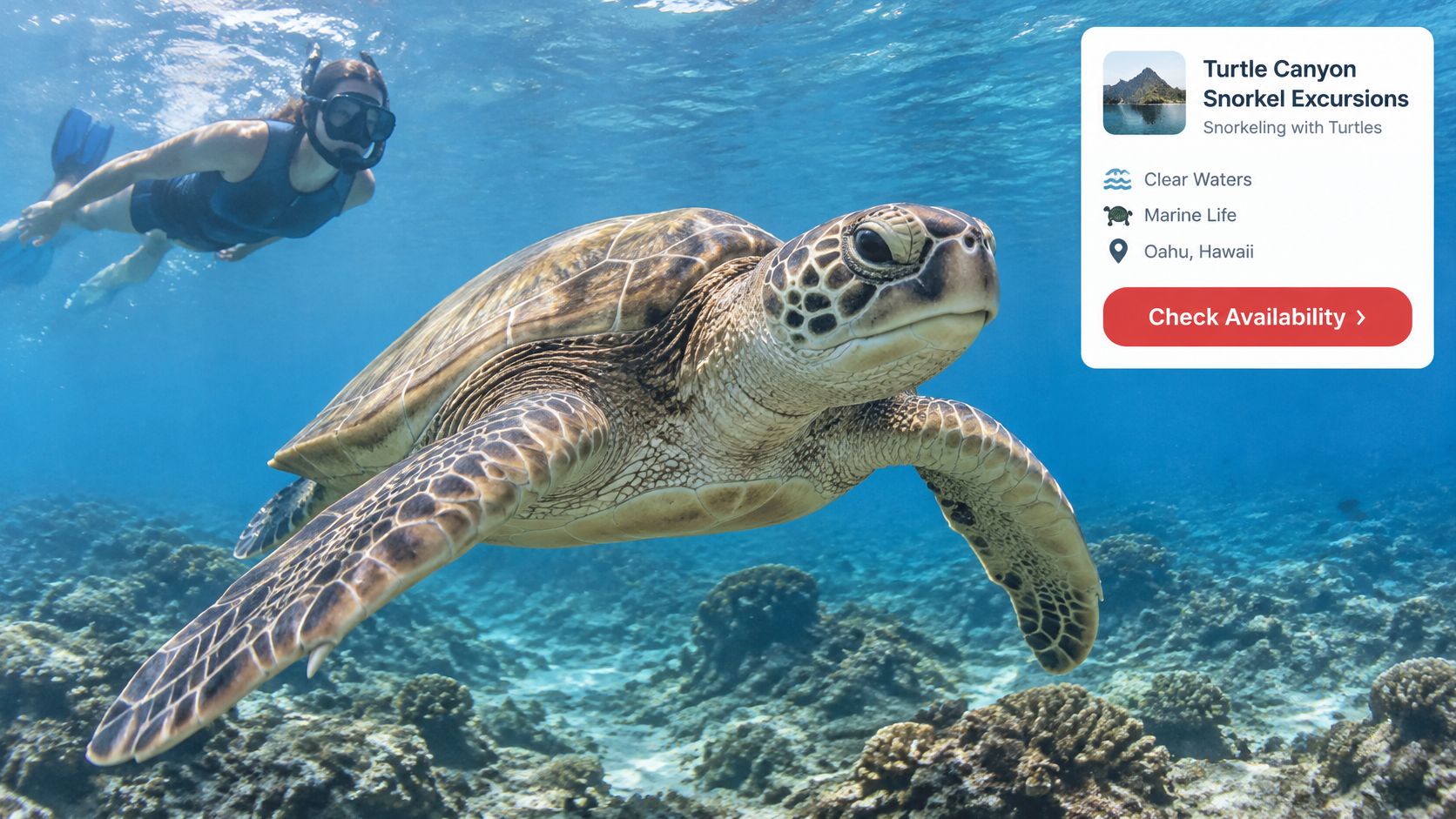
In the water, the NOAA and Hawaiʻi DLNR marine life viewing guidelines recommend maintaining at least 10 feet (3 meters) from Hawaiian green sea turtles. Touching, chasing, feeding, encircling, or blocking a turtle can cause stress, overexertion, and disruption of normal behavior. Ten feet is roughly two body lengths for most adults, so if you could reach the turtle with a fin kick, you're too close.
Five Steps That Keep the Distance Honest
- Brief your group before entry on the 10-foot distance, so nobody learns the rule while staring at a turtle.
- Position yourself to the side, never directly above or behind the animal, where you look like a predator or block its path to the surface.
- Stop kicking and let it pass if a turtle swims toward you. The animal chooses the distance, not you.
- End the look when the turtle changes direction or surfaces repeatedly, since both can signal that it wants space.
- Spread out if swimmers are close enough to touch fins, because a tight group compresses the turtle's escape route even when each person feels polite.
On the beach, stay back from a basking turtle, keep people and cameras from forming a circle, and never stand between the animal and the ocean. From a boat, the distance grows, with no sudden speed changes and the engine in neutral when a turtle is met. The Hawaiʻi wildlife viewing protocols put vessels at least 50 yards from sea turtles and call for reduced speeds of roughly 5 to 10 knots over shallow reefs.
Practical rule: Judge the encounter by the turtle's calm behavior, not by how close you got.
Crowding forces a turtle to spend energy escaping instead of feeding or breathing. If you want background on the animal itself before your swim, read up on the Hawaii turtle and its protected status, then put the camera down and watch. A relaxed turtle that keeps grazing while you float off to the side is the best outcome turtle bay snorkeling offers.
A Calm Morning Versus a Closed Cove
Two days at the same beach can teach you more than any forecast app. Say it's a June morning and you're staying near Turtle Bay Resort. You walk down at sunrise with coffee, watch the cove mouth through a full set cycle, and see little whitewater on the reef. The sandy lane is clear, the water inside looks green and calm, and resort staff tell you the surf stayed small overnight.
You rent gear, test the mask seal on the sand, and enter Kuilima Cove while the wind is still light. For 30 to 45 minutes you stay over sand and the inner reef, watching reef fish work the rock edges. A turtle cruises through, and you stop kicking and back off when it drifts closer than your comfort zone. You're rinsed, dry, and off the beach before the trade winds build and the sand gets stirred by the late-morning crowd. Nothing about that morning required luck. You matched the day to the spot.
The January Afternoon That Looks Nothing Like It
Now say it's a January afternoon with a northwest swell running. The same cove has shore break thumping at the waterline, the outer reef is a band of whitewater, and the water inside is cloudy with sand. Shark's Cove isn't a backup in that pattern. It's a worse idea, because its rocky entry gives the surge something hard to push you into.
The right plan that day is a shoreline walk. Look for a resting honu from a distance, watch the surf do what the North Shore is famous for, and save the mask for a south shore day. The mistake to avoid is treating a prepaid resort day, a rental you've already paid for, or a long drive as a reason to enter. Money spent on land doesn't change what the water is doing.
The Edge Case in Between
There's a third day worth recognizing. A summer afternoon starts calm, you swim the June plan, and then the wind builds and chop starts slapping your snorkel. That's the June plan cut short, not a reason to swim farther out hunting clearer water. The clear water beyond the chop belongs to stronger swimmers, and the swim home runs against the wind that just picked up.
- June morning: Check, enter early, stay inside, leave before the wind.
- January swell: Walk, watch, and move the swim to another shore.
- Windy summer afternoon: Shorten the swim and exit while it's still easy.
Before you drive to the North Shore, decide which example your forecast resembles. If you can't tell, plan for the walk and let a calm cove surprise you. You'll never regret arriving ready for either day.
South Shore Options When Turtle Bay Is Rough
Start from that January scene. The North Shore is for watching, not swimming, but your vacation dates don't move just because the swell arrived. A turtle swim may still be available on Oahu's south shore, where the same northwest swell that closes Kuilima Cove often leaves Waikiki-side water workable. You have two realistic backups, and they suit different travelers.
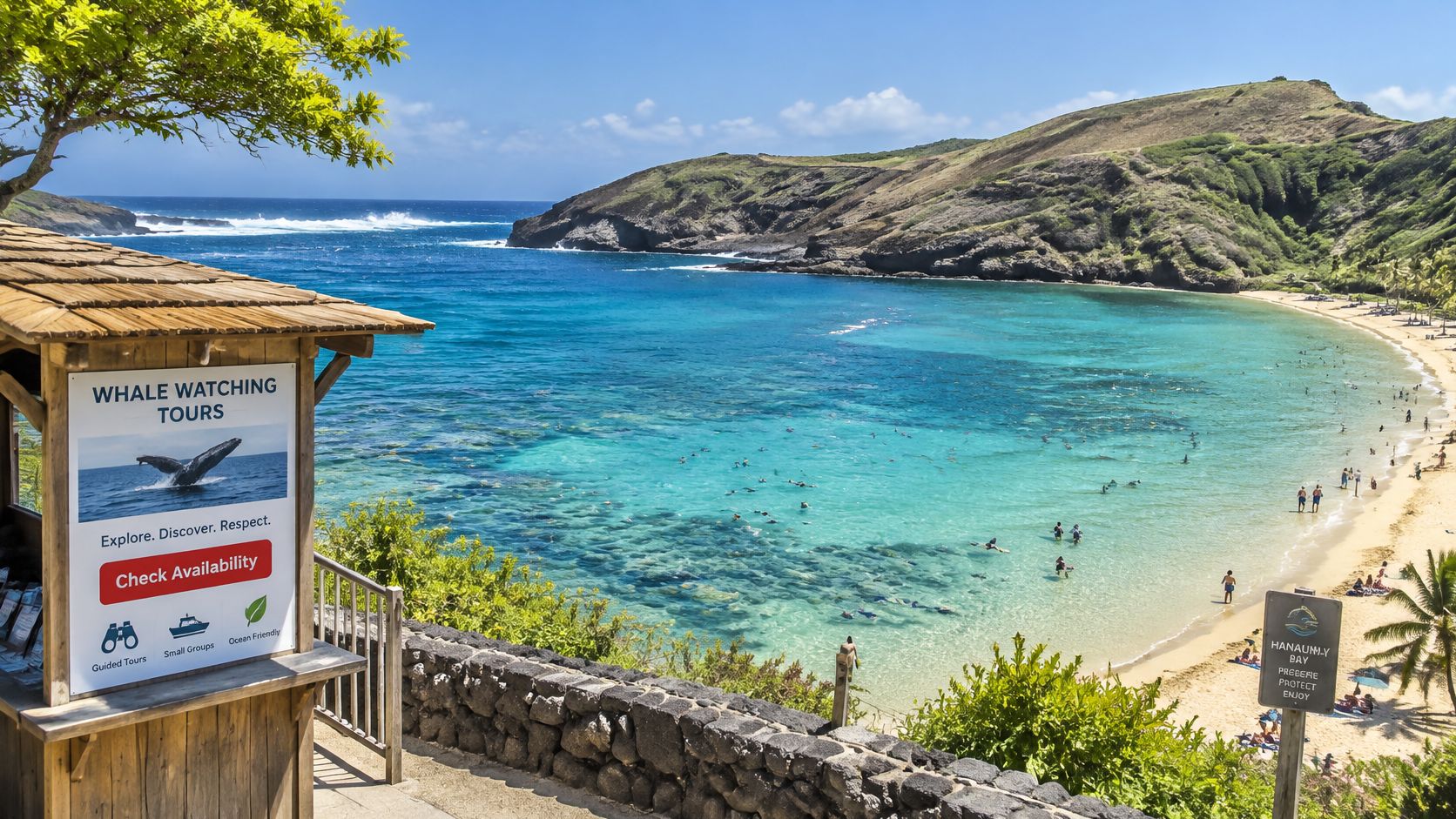
Hanauma Bay is the well-known shore alternative. It's a curved, usually protected bay with facilities, rentals, and shallow inner reef, so a self-guided family can walk in from sand much like Kuilima on a good day. The trade-offs are logistical. It requires reservations, charges an entry fee, and involves a walk down to the beach, and it sits on the opposite side of the island from Turtle Bay. Treat it as its own planned day, not a quick side trip after a North Shore disappointment.
The Boat-Based Backup Off Waikiki
The other option is a guided boat trip to Turtle Canyon, an offshore reef off Waikiki. Snorkel Turtle Canyon runs that trip, and our crew points out turtles and reef fish during the swim.
Because the reef is offshore, we require a professional guided boat tour to reach Turtle Canyon safely, since it can't be accessed from the beach. Our tours depart from a convenient location in the Waikiki area for guests staying at local hotels or resorts, and we see sea turtles on 99% of our trips. Expect deeper water than Kuilima's inner cove, because a 2026 Living Ocean Tours guide to Turtle Canyon reported that snorkeling water depth at Turtle Canyon generally ranges from 20 to 40 feet. That's boat snorkeling, not a wade, so flotation and in-water guidance matter more than they do at a sandy cove.
If you want the geography clear before you commit, this overview of Turtle Canyon in Honolulu shows where the reef sits relative to Waikiki. The short version is that you're swimming over an offshore reef system with a boat beside you, not walking in from a beach.
Pick Hanauma Bay for a self-guided shore day you've reserved ahead, and pick Turtle Canyon when the goal is a supervised turtle encounter without a North Shore swim.
Neither backup rescues a day when the whole island is blown out, and crews and park staff make their own go or no-go calls. What the south shore gives you is a second chance on a different coastline, which is exactly what winter dates demand.
Choose the Water That Matches Your Dates
Make the booking decision from your dates, not from a postcard. Your calendar already contains most of the answer, and the surf check on the day supplies the rest. Work through these three cases candidly.
- May through September, calm cove: Snorkel Kuilima Cove early in the morning. Use Shark's Cove as a second summer stop only when its cancel conditions are clear, meaning no surge in the cove and no swell wrapping in.
- November through March: Skip the North Shore swim. Walk the beach for resting honu, enjoy the surf from land, and move your water plan to the south shore instead of hunting for a gap in the sets.
- Seeing honu in the water matters most: Book the guided Turtle Canyon trip rather than relying on a shore entry cooperating with your fixed dates.
For that third case, here are the facts to weigh. The Turtle Canyon Snorkel Adventure costs up to $109, lasts 2 hours, and is open to guests ages 3 and up, with about 60 minutes of dedicated snorkeling time at the reef. There's no fee to access Turtle Canyon itself, so the tour price covers the boat, crew, equipment, and guided experience. Check the current departure times on the booking page, because daily spots are limited and fixed vacation dates should be reserved ahead.
Bring a swimsuit, towel, mineral sunscreen with zinc oxide or titanium dioxide, and a hat or sunglasses. Beginners get flotation and in-water help, and winter visitors get a reef the North Shore can't offer that week.
Check tomorrow's North Shore surf before you set an alarm for the drive. If the cove is closing out, use the button instead of forcing the entry, and let Turtle Bay be what it is that week, a beautiful beach for a walk.
When the North Shore closes Kuilima Cove, Snorkel Turtle Canyon takes you by boat from the Waikiki area to the offshore Turtle Canyon reef for a guided two-hour snorkel with equipment, flotation, and crew who point out honu and reef fish while keeping respectful distances. It's the south shore answer for winter dates and for anyone who'd rather not gamble a vacation morning on a shore entry. Plan your backup swim at Snorkel Turtle Canyon and save Turtle Bay for the calm summer morning it deserves.