
Have you searched for a Turtle Bay snorkeling tour expecting to find a boat ride from Waikiki, then run into shore-snorkeling advice for Oahu's North Shore? The names are easy to mix up, but the experiences are different. Turtle Canyon is a shallow offshore reef near Waikiki, reached by boat, while a Turtle Bay search may lead to beach-entry spots far from the south shore.
That difference matters before you book. A guided trip gives you boat access to the reef, crew supervision, and help observing wildlife without crowding it. Turtle sightings are never guaranteed, and a good encounter isn't about getting as close as possible. It's about seeing a wild turtle while letting it carry on undisturbed.
Hawaiian green sea turtles, or honu, also make this more than a scenic outing. After decades of commercial harvest, the Central North Pacific population began recovering following state protections established in 1974 and protection under the U.S. Endangered Species Act in 1978. NOAA reported that the nesting population was increasing by about 3–5% annually by 2015, part of a conservation story that makes respectful viewing essential (NOAA's Hawaiian green sea turtle overview).
Table of Contents
- Why Turtle Bay Searches Often Lead to Turtle Canyon
- Shore Snorkeling Compared With the Guided Boat Trip
- Departure Logistics and the Two-Hour Schedule
- Gear Included on Board and What to Bring
- Safety Briefings and Who Can Safely Join
- Turtle Viewing Rules and Realistic Expectations
- Booking Your Turtle Canyon Snorkel Next Steps
Why Turtle Bay Searches Often Lead to Turtle Canyon
Search for “Turtle Bay snorkeling tour” while planning a Waikiki vacation, and you may see a mix of beach spots, North Shore advice, and guided boat trips. The key distinction is geography: Turtle Canyon is just off Oahu's south shore near Waikiki, not a cove you can reach by walking into the water. A boat carries guests to the offshore reef, where the crew supervises snorkeling and helps visitors understand what they're seeing.
That access changes the experience. A beach snorkel starts at the shoreline, so you decide whether conditions feel safe, how far to swim, and when to turn back. A Turtle Canyon excursion handles the ride to the reef and provides an organized setting for getting in and out of the water. Its two-hour format can fit into a busy vacation day, while still making room for a coastal cruise and a guided snorkel.
The name confusion can lead to mismatched expectations. If you're looking for a beach-entry outing, a boat trip to Turtle Canyon isn't the same thing. If your priority is an offshore reef near Waikiki and a supervised wildlife-viewing experience, you can learn more about snorkeling at Turtle Island near Honolulu, then compare that option with shore access.
Why honu sightings come with responsibility
Hawaiian green turtles are protected wildlife, not a scheduled attraction. The recovery recorded in Hawaiʻi reflects the importance of conservation protections, but it doesn't mean every outing will bring a close encounter. NOAA-supported research found Hawaiʻi had the lowest average turtle density among surveyed Pacific regions, at about 0.07 turtles per kilometer, while also recording the highest annual growth estimate among those regions (NOAA-supported Pacific turtle survey research).
So the right expectation is a guided opportunity to observe, not a promise of interaction. A thoughtful crew helps guests watch from a respectful distance and lets turtles choose where to swim. That balance is what makes an offshore wildlife trip different from searching for a turtle in the water.
Shore Snorkeling Compared With the Guided Boat Trip
Shore snorkeling from Waikiki Beach is convenient: you can enter from land and decide how long to stay. But convenient access doesn't guarantee calm conditions or a turtle sighting. Oahu's official snorkeling guidance warns that high surf, strong winds, heavy shorebreak, and strong currents can make snorkeling dangerous. It advises people to assess conditions before entering and not to get in if the water looks unsafe (Hawaiʻi's snorkeling safety guidance).
The guided boat trip solves a different problem. Turtle Canyon is offshore and can't be safely reached from the beach, so a professional boat tour provides access without asking guests to swim out to the reef. The site offers deeper water, better visibility, and a higher likelihood of turtle sightings than snorkeling from Waikiki Beach. Those advantages don't make wildlife predictable, but they do mean you're not relying on a shoreline search.
| Factor | Snorkeling from Waikiki Beach | Guided Turtle Canyon Boat Trip |
|---|---|---|
| Access | Enter from shore; conditions determine how far and where you can safely go. | Boat transport takes you to an offshore reef that isn't accessible from the beach. |
| Water conditions | Surf, wind, and currents can affect comfort and safety. | The crew supervises the outing and helps guests enter and snorkel at the reef. |
| Turtle sightings | Possible, but less predictable from the beach. | The reef offers a higher likelihood of sightings, but none are guaranteed. |
| Equipment | Bring or arrange your own gear. | Snorkeling gear and flotation equipment are provided on board. |
| Supervision | You manage your own route and decisions in the water. | Crew members provide safety information and in-water guidance. |
Which option fits your day?
Choose a beach session if you're a confident swimmer who wants an independent shoreline snorkel and is comfortable judging conditions before entering. It gives you flexibility, but you're responsible for your gear, your route, and your decision to stay out of the water.
Choose a guided boat trip if you're visiting Waikiki, want access to an offshore reef, or prefer crew support while snorkeling. Families and first-timers may value the structure, but should still be honest about each swimmer's comfort in open water. A guide can help you manage the experience; they can't make the ocean behave like a swimming pool.
Departure Logistics and the Two-Hour Schedule
The trip begins on land at Pier B, 1025 Ala Moana Blvd, Honolulu, a Waikiki-area departure point that's convenient for visitors staying at nearby hotels and resorts. Give yourself time to find the pier, check in, and listen to the crew before boarding. Starting without a rush makes it easier to focus on the safety briefing and get comfortable with the equipment.
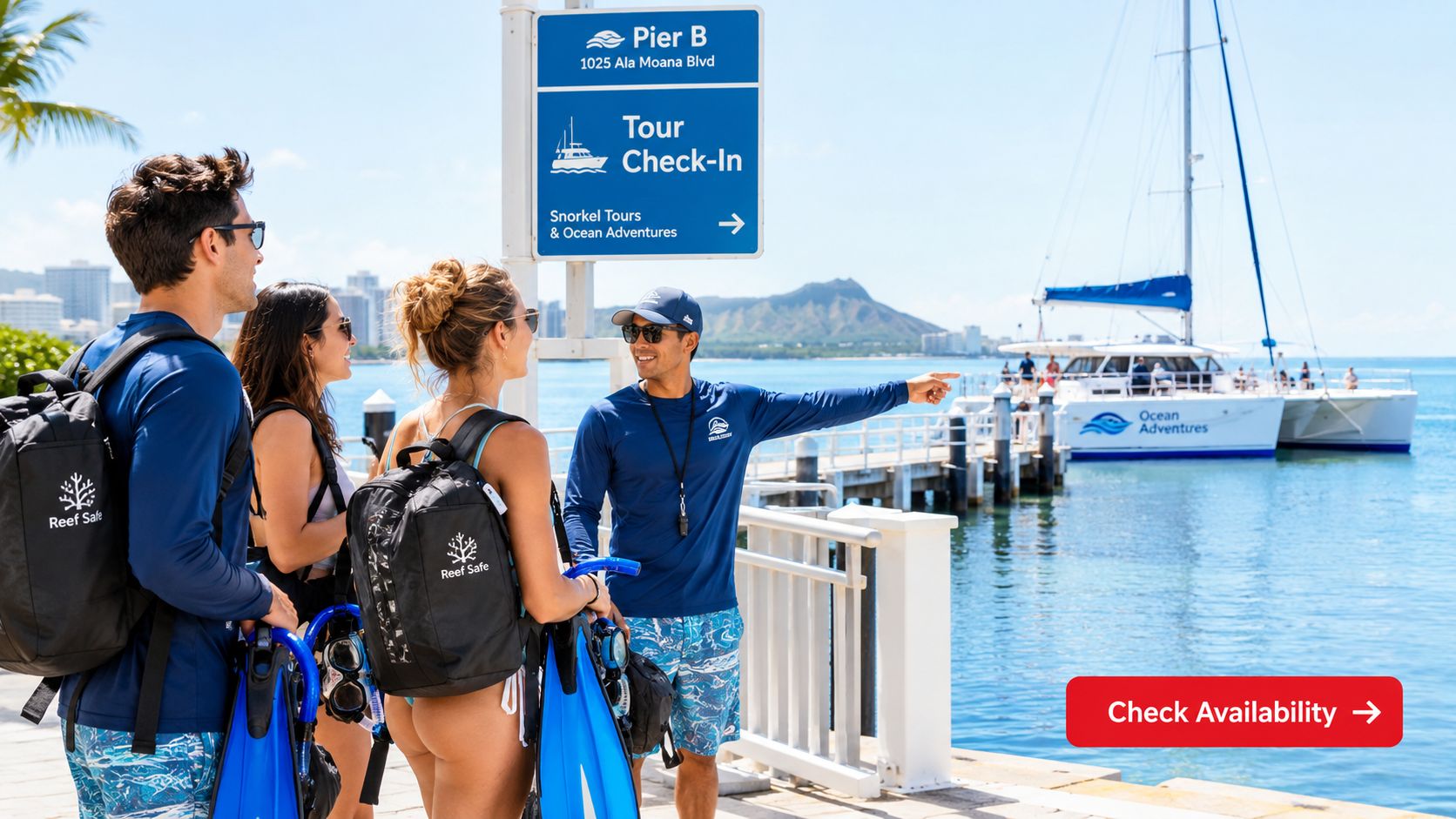
From the pier to the reef
Boarding: Once aboard, listen for instructions about movement on the boat, equipment, and how the crew will manage entry and reboarding. If anything is unclear, ask before the boat leaves.
Coastal cruise: The ride offers views of the Waikiki skyline and south shore. The pace also gives the crew time to explain what guests may see and how to behave around wildlife.
Snorkeling: The two-hour outing includes approximately 60 minutes in the water. Crew members point out turtles, schools of colorful fish, and other marine life, while providing guidance during the snorkel.
Return: After the swim, guests reboard and travel back to the pier. The exact feel of the day depends on ocean conditions, so follow the crew's directions rather than trying to hold to a personal schedule.
The boat's behavior near turtles is part of responsible viewing, not a minor detail. NOAA guidance says vessels should stay at least 50 yards away when viewing turtles from a boat, avoid excessive speed and sudden direction changes, and never chase, encircle, or trap an animal. If a turtle is spotted, operators should slow to no-wake speed or put the engine in neutral so the turtle can move away (NOAA's marine wildlife viewing guidelines).
A simple way to picture the outing is pier, cruise, supervised snorkel, return. The boat does the traveling; guests don't need to swim from shore to find the reef.
Gear Included on Board and What to Bring
You don't need to buy or rent snorkeling equipment for the guided outing. Masks, snorkels, fins, and flotation vests are supplied on board, so you can focus on comfort and sun protection instead of trying to pack a full set of gear. A properly fitted vest also gives first-timers extra support in the water, though it doesn't replace the ability to stay calm and follow instructions.
Pack a swimsuit, a towel, reef-safe sunscreen, and sun protection such as a hat or sunglasses. These are the practical items that make the ride and time in the water more comfortable. You can read more about Hawaiian sea turtle tours and what to expect while planning your day.
A quick packing check
- Swimsuit: Wear it under your clothes if that makes boarding and changing easier.
- Towel: Bring one for drying off after the snorkel.
- Reef-safe sunscreen: Apply it with the reef in mind, and listen to the crew's advice during the safety briefing.
- Hat or sunglasses: Use these for sun protection while you're on the boat.
- Snorkeling gear: Leave it at home if you prefer. The tour includes the necessary professional equipment.
Reef-safe choices are part of being a considerate guest in a marine habitat. Hawaiʻi's safety guidance also tells snorkelers not to touch coral or marine life, not to feed fish or turtles, and never to stand on a coral reef. Think of the reef as a living surface, not a step or a resting place.
The aim is to arrive ready, not overpacked. Your gear is provided; your main job is to bring what keeps you comfortable and follow the crew's instructions once you're on board.
Safety Briefings and Who Can Safely Join
A guided trip can make the outing easier to manage, especially if you're new to snorkeling. Before entering the water, the crew gives a safety briefing, provides flotation support, and offers in-water guidance. That structure helps beginners understand what to do, where to stay, and how to get help instead of having to figure everything out alone.
Still, “family-friendly” doesn't mean every person will be comfortable in open water. A flotation vest helps with support, but it doesn't eliminate panic, cold stress, water getting into a snorkel, or difficulty following directions. Being able to float is not the same as being comfortable breathing through a snorkel or staying calm when the boat and shore look farther away.
Questions families should settle beforehand
The trip is open to guests ages 3 and up, with flotation support available. For a young child, or anyone who feels anxious in water, talk through practical supervision before the outing: who stays close, what the child should do if they feel overwhelmed, and how the group will return to the boat.
Ask yourself these questions before deciding:
- Can the swimmer follow directions? They need to listen to the crew and respond calmly.
- Can a guardian stay close? A child or nervous swimmer may need a trusted adult within arm's reach.
- What happens if someone wants to stop? Know how the crew manages reboarding and whether a guest may stay onboard rather than enter the water.
- Is the person comfortable trying? If they're already distressed before getting in, don't treat the age minimum or flotation gear as a reason to push ahead.
A guided setting is not a substitute for a realistic readiness check. If a swimmer isn't calm enough to follow instructions, staying on the boat may be the safer choice. A good outing leaves room for that decision instead of treating water entry as compulsory.
Turtle Viewing Rules and Realistic Expectations
A turtle encounter can happen naturally. You're floating while a guide points out movement near the reef, and a honu passes through the water. The turtle may seem close, but your job is to stay still, leave a clear route, and let it decide where to go. The crew guides guests to observe passively, not pursue the animal.
Snorkel Turtle Canyon reports seeing sea turtles on 99% of its trips. That figure reflects the company's operating history, not a promise about your departure or any individual encounter. Wildlife is unpredictable, and a protected animal may be elsewhere or choose not to come near the group.
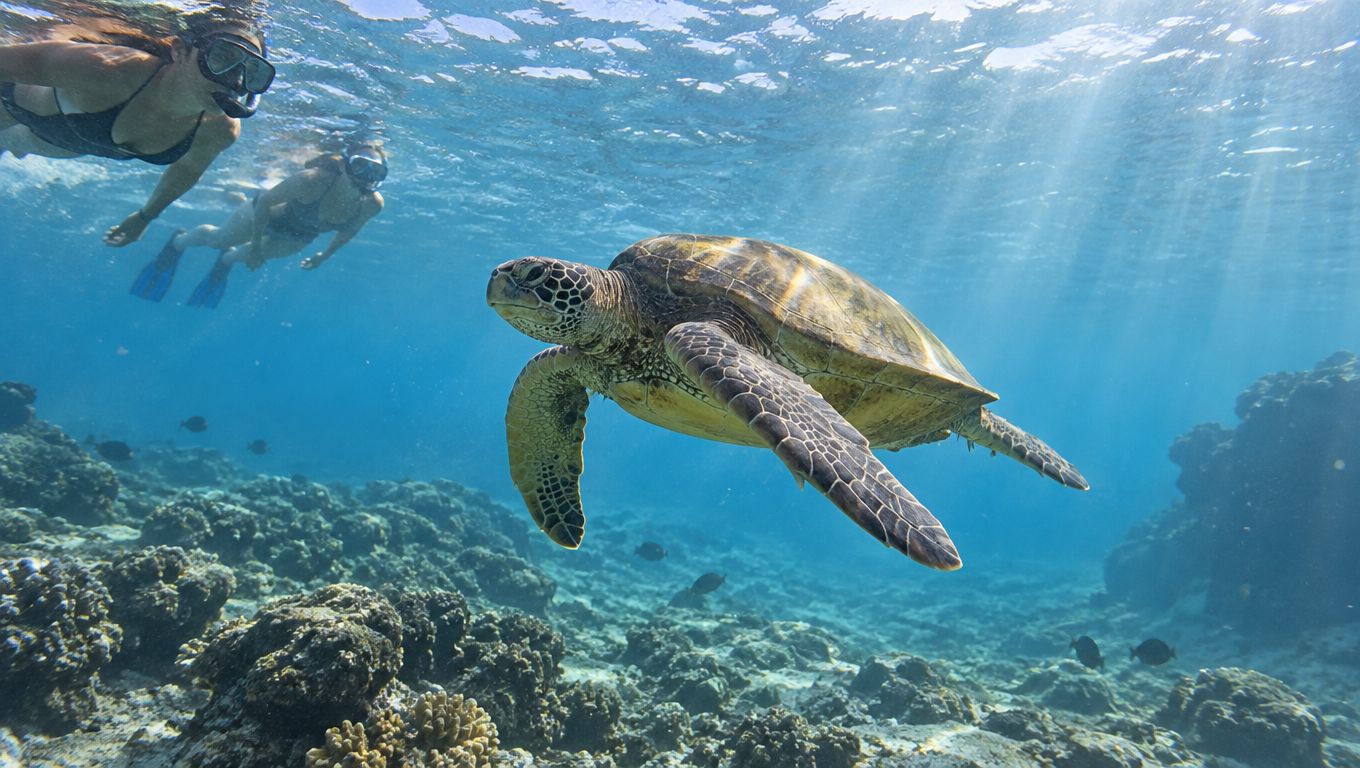
Keep space and leave the route open
NOAA recommends maintaining at least 10 feet (3 meters) from Hawaiian green sea turtles, both underwater and at the surface. A close approach can interrupt ordinary behavior, including feeding, resting, surfacing, or changing direction. The simplest way to respect the rule is to stay beside a turtle's path rather than swimming in front of it, and to back off if it changes course (NOAA's Hawaiʻi marine wildlife viewing guidance).
A good viewing distance gives the turtle choices. Don't touch, feed, chase, surround, or corner it. If it moves away, let it go.
Turtles may swim within a few feet of snorkelers, but that doesn't mean guests should move closer. Hold your position and give the animal room to continue its route. For more context about Hawaiian sea turtles and their habitat, remember that the reef is a living home, not a stage for a photo.
You may also see reef fish such as angelfish, parrotfish, and butterflyfish. If no turtle appears during your time in the water, slow down and watch the reef rather than searching by chasing movement. The crew can help point out marine life, but a respectful wildlife trip accepts that the animal sets the terms of the encounter.
Booking Your Turtle Canyon Snorkel Next Steps
A guided Turtle Canyon trip takes you by boat to an offshore reef, with a two-hour outing that includes about an hour of supervised snorkeling. Crew guidance helps you observe turtles and reef fish while following responsible viewing practices. The Turtle Canyon Snorkel Adventure costs up to $109 and is open to guests ages 3 and up.
Daily spots are limited, so booking ahead is sensible if you have a particular date or a short stay in Honolulu. You can also browse things to do in Honolulu as you plan the rest of your trip. The review widget below offers guest feedback to consider alongside the trip details.
Choose a morning that fits your schedule, confirm your place, and arrive ready to listen to the crew's instructions. If you're looking for a guided boat ride to an offshore reef with supervised turtle viewing, reserve the next available morning.
Snorkel Turtle Canyon offers guided boat trips from Waikiki to the offshore Turtle Canyon reef, with equipment, crew guidance, and time in the water to observe honu respectfully. For a Turtle Bay snorkeling search that's really about a boat-accessed reef near Waikiki, visit Snorkel Turtle Canyon and reserve the next available morning.