
A good turtle encounter isn't measured by how close you swim. It's measured by whether the honu, the Hawaiian green sea turtle, keeps feeding, resting, or traveling as if you aren't there. That's the standard to use for snorkeling with turtles in Hawaii. You'll still get the clear view you came for. You'll also avoid turning a protected animal's normal day into a chase for a photograph.
Table of Contents
- Why Hawaiian Green Sea Turtles Are Worth Finding
- Best Places to Snorkel With Turtles in Hawaii
- What a Guided Turtle Canyon Trip Includes
- How Close You Can Get Without Disturbing Turtles
- Safety Checklist for First-Time Turtle Snorkelers
- How Conditions Change Your Chances of Seeing Turtles
- Book Your Turtle Canyon Snorkel
Why Hawaiian Green Sea Turtles Are Worth Finding
In 1973, only 67 nesting turtles were recorded, while recent estimates put the number at nearly 500 nesting females annually after growth of approximately 5% per year over the last two decades, according to Hawaii's Division of Aquatic Resources sea turtle page. That recovery is why a sighting lands differently from watching fish pass over the reef. You are looking at an animal whose numbers rose because people protected nesting habitat, monitored nests, and learned to watch without crowding.
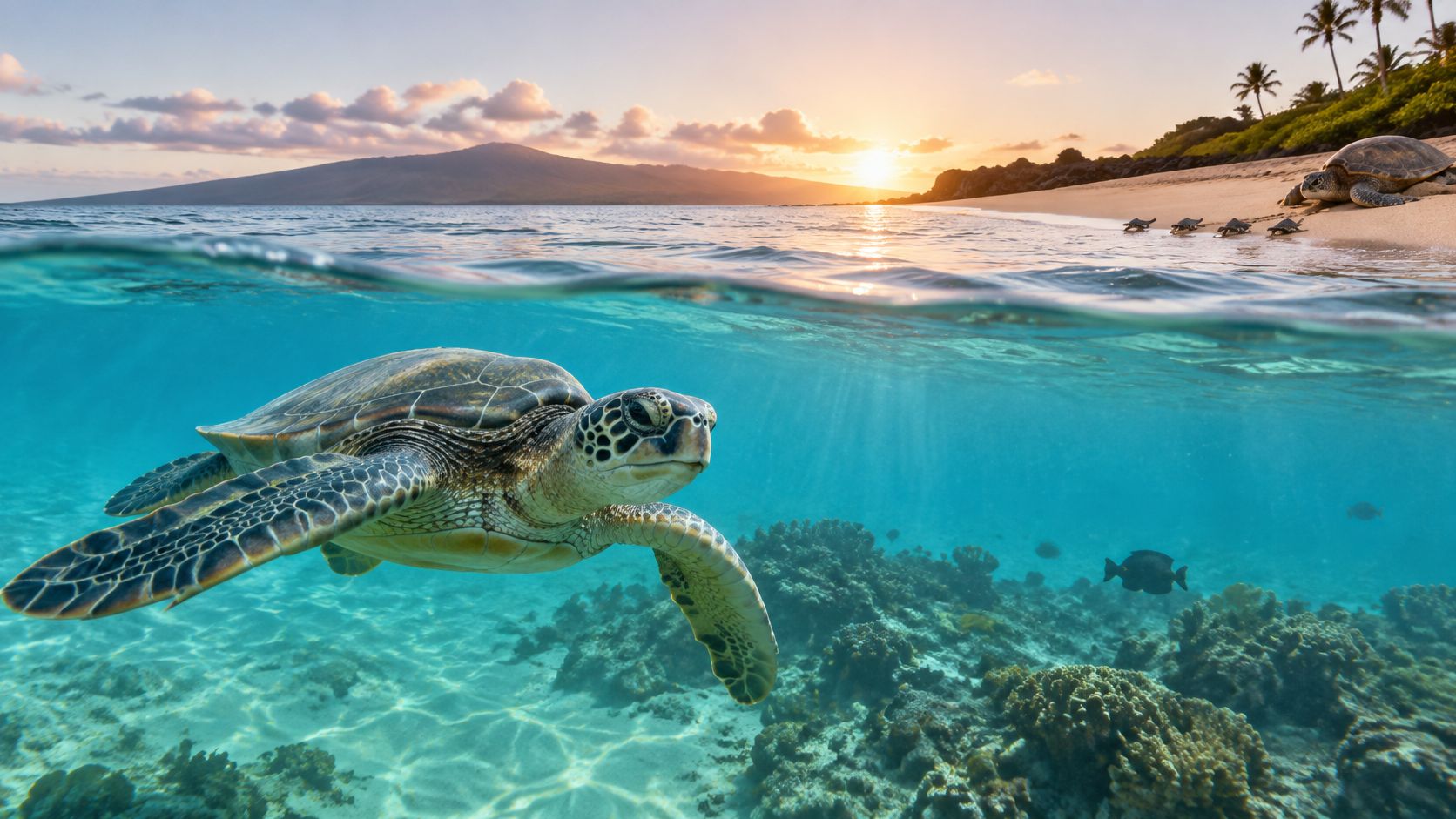
The Oahu turtles you meet are travelers with a wider range than one beach. A green turtle grazing near Waikiki is connected by its life cycle to remote nesting islands far offshore, the way a songbird at a feeder may belong to forests hundreds of miles away. You do not need the exact migration map to grasp the point: the turtle in front of you is part of a much larger Pacific story.
Protected, even as the population improves
A recovering population can make the rules sound optional. They are not. Hawaiian green sea turtles remain protected under the U.S. Endangered Species Act and Hawaii law, so the encounter stays hands-off even when a turtle chooses to rise near you.
Here is the useful beginner model. A sea turtle must surface to breathe, which is why people spot them from boats and from shore. Breathing is not an invitation to approach, block, or herd it for a better angle. No beach, boat, season, or guide can promise that a wild turtle will pass close on your schedule.
That limits the promise, and it also raises the value. When you watch a Hawaii turtle keep feeding, resting, or traveling in clear water, the reward is evidence that the animal felt no need to change its day for you.
The best sign of a successful encounter is a turtle that never needs to react to you.
Best Places to Snorkel With Turtles in Hawaii
Start with access, not reputation. A famous beach won't help if you don't have a car, the surf is up, or you're nervous entering open water without a guide. This table compares four practical options. There's no verified sighting rate published for these locations as public snorkel spots, so don't choose based on a percentage someone invents for a beach.
| Location | Access | Best for | Skill level |
|---|---|---|---|
| Turtle Canyon, Waikiki, Oahu | Guided boat from Pier B, Honolulu | Families and first-timers wanting a boat-based route | Beginner to experienced |
| Laniakea Beach, North Shore, Oahu | Shore entry from the beach | Visitors with a car and calm summer conditions | Intermediate; avoid in winter surf |
| Kahalu'u Beach Park, Kailua-Kona, Big Island | Shore entry over a shallow reef | Budget beginners and short snorkel sessions | Beginner |
| Ko Olina Lagoons, Oahu | Shore entry into calm lagoons | Practicing in very calm water | Beginner |
What changes between these choices
Turtle Canyon sits offshore from Waikiki, so you reach it by boat rather than swimming out from the sand. Compared with snorkeling from Waikiki Beach, it offers deeper water, better visibility, and a higher likelihood of turtle sightings. On our trips, Hawaiian green sea turtles are seen 99% of the time, although that operating history still isn't a promise for your specific morning. We depart from a convenient Waikiki area location, which matters if you're staying nearby without a rental car.
Laniakea Beach is different. People go there because turtles often rest on the sand, and you may have a rewarding shore visit when the ocean is calm. Winter surf on the North Shore changes the calculation completely. Don't treat a summer photograph as evidence that a winter entry is safe.
Kahalu'u Beach Park suits a beginner who wants a shallow reef and a short, self paced session on a calm morning. The trade off is control. You're choosing the entry, watching other swimmers, and deciding when conditions have changed.
Ko Olina's lagoons are best understood as practice water. They're calm and approachable on Oahu's leeward coast, but practicing your mask clearing and floating is a different goal from choosing a reef primarily for turtles. If you're deciding between a scenic shore stop and an offshore reef, this guide to turtle beach on Oahu can help you picture the shore based side.
Three questions that route you quickly
- Do you have a car? If not, a Waikiki departure removes a major obstacle.
- Can you swim comfortably in open water? If not, choose supervised entry and flotation over an unassisted shore entry.
- Do you want guidance or independence? A boat trip gives you a set route, crew oversight, and help spotting wildlife. A shore visit gives you flexibility and a lower cost, but you manage the risks yourself.
If you have a car, strong water confidence, and calm conditions, a shore spot can work well. If you're based in Waikiki, bringing children, or snorkeling for the first time, Turtle Canyon is the simpler fit.
What a Guided Turtle Canyon Trip Includes
A typical Turtle Canyon excursion lasts two hours, with about 60 minutes of supervised snorkeling. The structure is easy to follow, which helps first timers because there are no surprise shore entries or long swims from the beach.
Your trip, in order
- Arrive at Pier B: Check in at 1025 Ala Moana Blvd, Honolulu and board the boat.
- Ride along Waikiki: Cruise past the coastline and skyline on the way to the reef.
- Listen to the briefing: The crew covers safety, flotation, entry and exit, and turtle etiquette before anyone gets in.
- Snorkel with guidance: Stay near the crew while they point out turtles and reef life.
- Return to the pier: Climb back aboard for the ride to Honolulu.
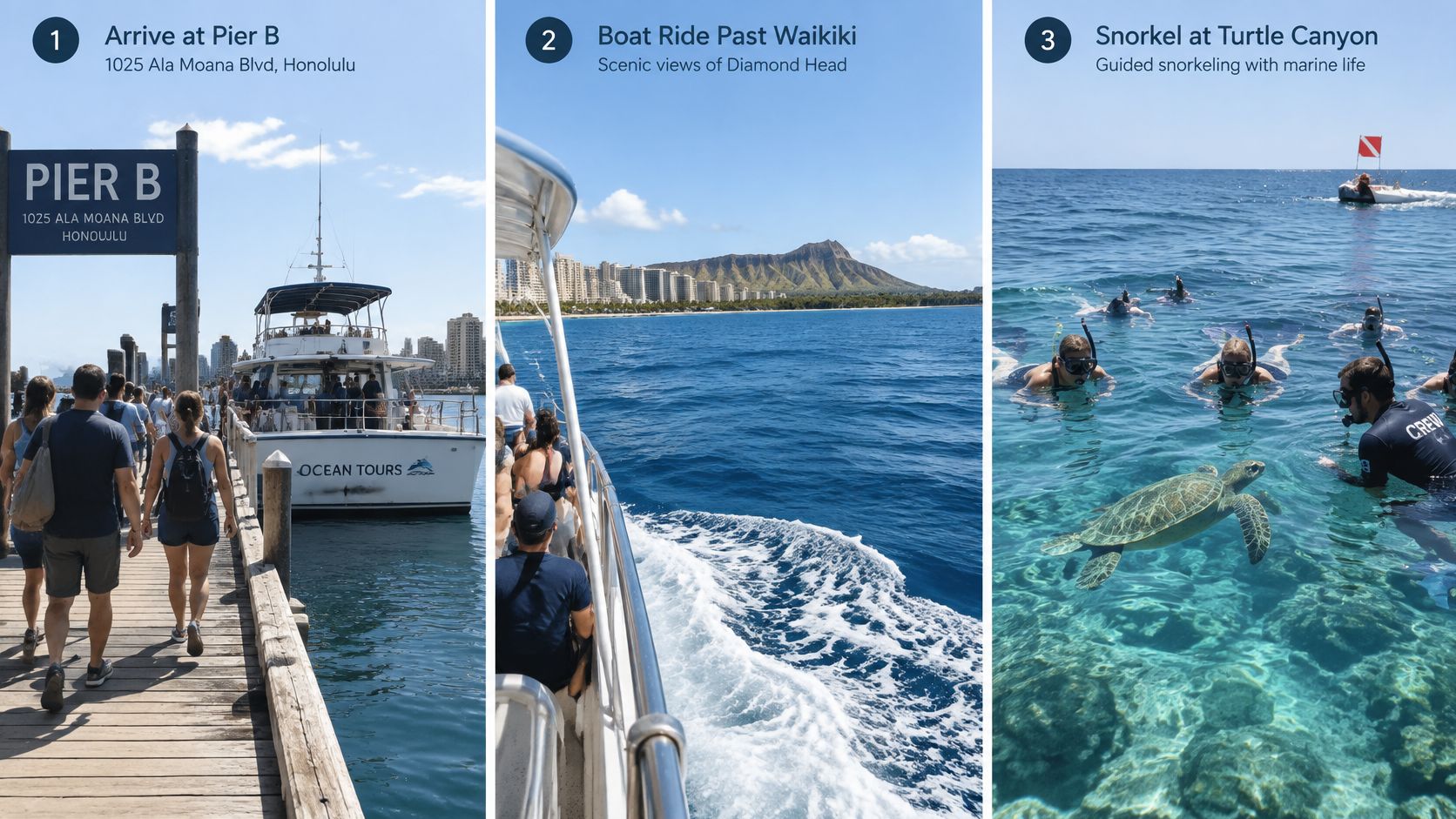
Turtle Canyon is a shallow offshore reef just off the south shore of Oahu near Waikiki. That's why the boat matters. The reef can't be accessed safely from the beach, so a professional guided boat tour provides the transport and supervised entry and exit. You're not paying only for a ride. You're getting a controlled way to reach water you shouldn't try to reach by swimming from shore.
During the approximately 60 minute snorkeling portion, the crew points out turtles, schools of colorful fish, and other marine life. You may see butterflyfish and angelfish around the reef. Dolphins appear on some days, but they're a bonus, not part of a guaranteed sequence.
Gear and flotation are supplied on board, so you don't need to rent a mask in Waikiki or guess which fins fit. That sounds minor until you're a beginner adjusting an unfamiliar mask while other guests enter the water. Here, you can get fitted, ask questions, and settle in before the snorkel starts.
This Snorkel Turtle Canyon company invites guests to read recent feedback before choosing a date:
How Close You Can Get Without Disturbing Turtles
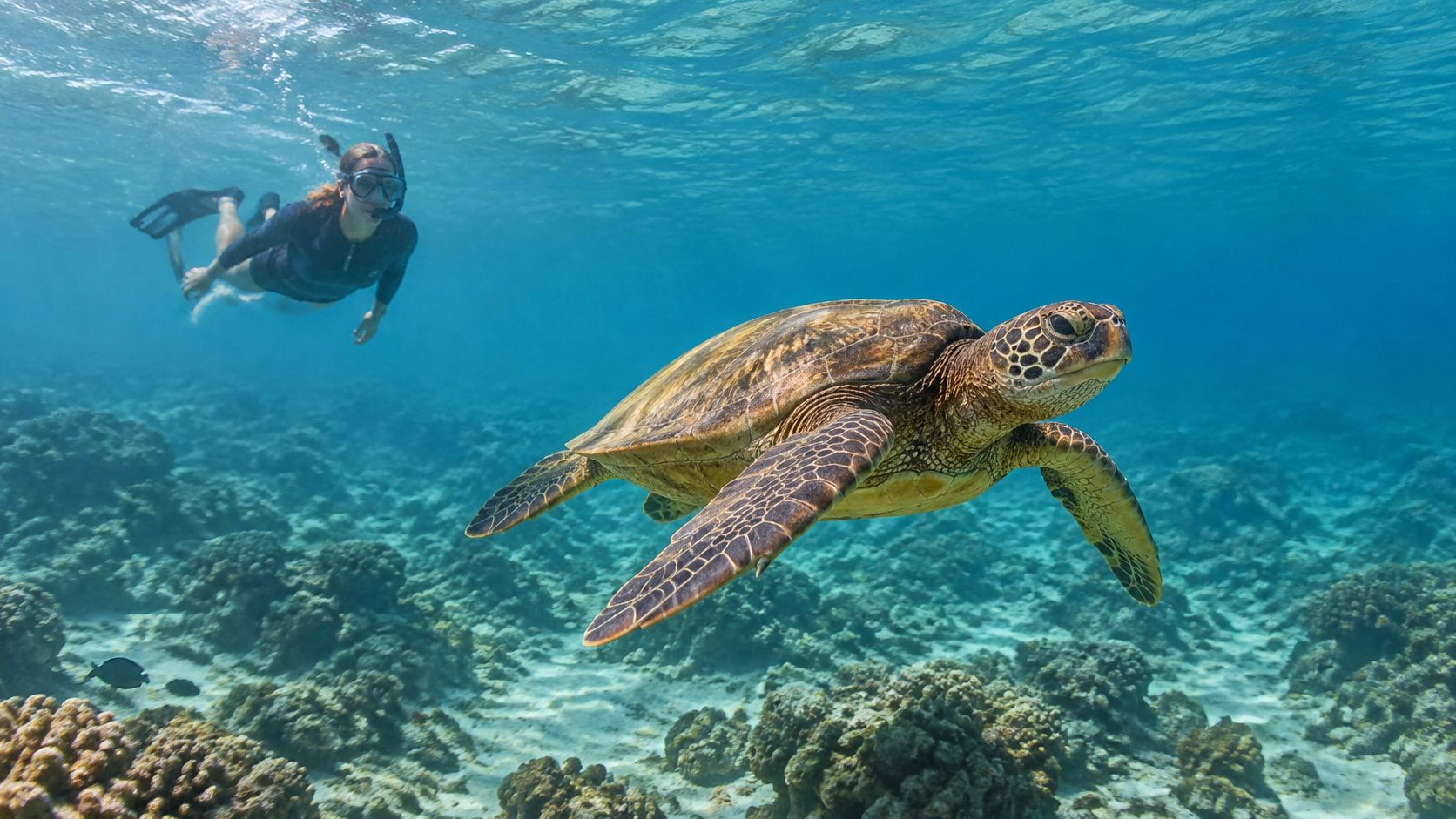
Keep at least 10 feet, or 3 meters, from a Hawaiian green sea turtle. NOAA Fisheries guidance for sea turtles in the Pacific Islands recommends that distance both in the water and on land, and it applies whether the turtle is swimming, resting, or basking. Use camera zoom or binoculars instead of moving closer for a better view.
Distance is only part of the rule. Touching, feeding, restraining, chasing, riding, or otherwise disturbing a turtle is unlawful under federal and state protections. Before every trip, our crew explains the same basics in plain terms. Don't touch or chase turtles, and stay at least 10 feet away.
| Behavior | Allowed? | Reason |
|---|---|---|
| Watching from at least 10 feet (3 m) | Yes | Matches NOAA and Hawaii guidance |
| Using camera zoom or binoculars | Yes | Gives a closer view without approaching |
| Touching or riding a turtle | No | Unlawful; harms the turtle and can injure you |
| Chasing or swimming after a turtle | No | Counts as harassment |
| Feeding a turtle | No | Changes natural behavior |
| Crowding a resting turtle | No | Can make it re-enter the water and compromise its safety |
| Standing near a basking turtle on the beach | No | The 10-foot rule applies on land too |
When a turtle swims toward you
Beginners often get confused. Turtles often swim within a few feet of snorkelers, and a curious looking approach can feel like an invitation. It isn't permission to follow, reach out, or stay in its lane. Our crew guides guests to give turtles space and let any close pass remain the turtle's choice.
- Stay still: Stop kicking toward it and let it pass.
- Leave its path open: Don't block its route to open water or to the surface.
- Back away slowly: Rebuild the distance without splashing or sudden movements.
Watch what changes after you stop. A turtle that suddenly dives, speeds up, or turns sharply may be reacting to pressure from swimmers. One person can cause that by hovering. A group can cause it by spreading out around the animal until every direction has a person in it.
Practical rule: Let the turtle choose the distance, then don't use its choice as an excuse to pursue it.
A close photograph that makes a turtle abandon its feeding spot isn't a better encounter than a distant view of it grazing undisturbed. Judge the moment by the turtle's behavior, not by how large it appears in your frame.
Safety Checklist for First-Time Turtle Snorkelers
Your first goal isn't to cover the whole reef. It's to enter calmly, breathe steadily, stay oriented, and get out before you're tired. Run through this checklist before you commit to the water.
Before and during your snorkel
- Be honest about swimming: Tell the crew if you're unsure in open water, and use flotation rather than hoping confidence appears after entry.
- Stay reachable: Wear your flotation device properly and remain within easy reach of your guide or partner.
- Bring the basics: Pack a swimsuit, towel, reef-safe sunscreen, and sun protection such as a hat or sunglasses for the boat.
- Apply sunscreen early: Put it on before snorkeling so you're not rushing, and don't use coral as a place to stand while you adjust gear.
- Never snorkel alone: Stay with a partner or guide who can notice if you're drifting or struggling.
- Check conditions: Look at wind, swell, and rain before leaving, then listen if the crew shortens or changes the plan.
- Control fins and hands: Keep them away from coral, reef animals, and turtles, especially when you turn around.
- Signal early: Raise a hand and call to the crew as soon as you feel tired, cold, panicky, or short of breath.
- Clear the entry area: Watch for the boat, ladder, and other swimmers when entering and exiting.
Hawaii's Division of State Parks wildlife guidance instructs people in vessels and people swimming, diving, or snorkeling to give swimming turtles a wide berth. It also warns that approaching a resting turtle can cause it to re-enter the ocean and compromise its safety. For a beginner comparing guided sea turtle tours, that instruction is a useful quality test. The crew should manage spacing before guests drift into a problem.
A short, calm session counts as success. If you spend twenty comfortable minutes watching reef fish and one turtle from a respectful distance, you've done the trip well. Getting out while you still feel steady is smarter than staying in until exhaustion makes the exit hard.
How Conditions Change Your Chances of Seeing Turtles
Conditions don't just affect whether a turtle is nearby. They affect whether you can see it, stay horizontal, hear your guide, and enjoy being in the water long enough to notice anything. Official guidance doesn't guarantee a sighting at a particular place or time. Hawaii State Parks' sea turtle viewing advice also places sightings in a wider conservation context, noting continuing threats such as climate change, habitat loss, light pollution, and fishing-line entanglement.
| Condition | What It Changes | What to Do |
|---|---|---|
| Wind and chop | Lowers visibility and makes shore entry harder | Choose calm mornings and ask for a shorter route |
| Swell and winter surf | Makes shore entries dangerous, for example on the North Shore | Skip shore spots and book a boat or a summer date |
| Rain and overcast | Lower light and murkier water after runoff | Check recent rainfall and reschedule if the water is cloudy |
| Glare on the surface | Makes turtles hard to spot from above | Look for darker shapes below and use polarized sunglasses on the boat |
| Water clarity | Visibility shrinks after heavy rain | Go after dry spells and ask the operator about recent conditions |
| Time of day | Mornings are usually calmer and clearer | Book the earliest slot available |
| Season | Summer is calmer on many shores; winter surf is rough | Plan by location and season |
A useful way to judge the day
Think in three outcomes rather than pass or fail. You may get a clear-water encounter, where a turtle feeds or rests where the group can watch comfortably. You may get a distant sighting, perhaps a turtle surfacing away from the reef or passing below in poor light. Or you may have a conservation-focused reef snorkel with fish and habitat but no close turtle view.
None of those outcomes justifies chasing an animal to improve the result. A boat can reach calmer, clearer offshore water on days when beach entries look rough, but it can't move a turtle onto the reef for you. If you're weighing a north shore plan against a Waikiki boat day, compare the logistics with Turtle Bay snorkeling before assuming both are equally easy in the same season.
If conditions shorten the snorkel, use the fallback well:
- Watch from the surface: Scan for turtles coming up to breathe.
- Ask about the reef: Learn which fish use the same habitat and where turtles feed.
- Reschedule poor forecasts: Choose a calmer morning rather than forcing a murky, tiring session.
Book Your Turtle Canyon Snorkel
Book the guided Turtle Canyon boat trip if you're staying in Waikiki, traveling with children, or you'd rather have a supervised offshore route than manage a shore entry yourself. It's the most direct fit for a first timer because transport, flotation, gear, briefing, and in-water guidance are handled as one plan.
The Turtle Canyon Snorkel Adventure costs up to $109, lasts 2 hours, and is open to guests ages 3 and up. About 60 minutes is dedicated to snorkeling at the reef. We offer a limited number of spots each day, so booking in advance matters when you need a specific date or you're on a short island stay.
That advance decision also lets you pick a morning instead of accepting whatever remains. Check the forecast after reserving and again before you leave. If wind or rain makes the water look poor, contact the operator early rather than arriving at the pier hoping the ocean changed overnight.
Do this next:
- Choose your format: Use the car, swimming, and guidance questions to decide between a boat trip and a shore visit.
- Match the forecast: Compare wind, swell, and recent rain with the conditions table.
- Reserve, then snorkel passively: Secure your place, arrive prepared, and keep the distance once you're in the water.
Snorkel Turtle Canyon runs guided two hour boat trips from Pier B to the offshore Turtle Canyon reef, with gear, flotation, and crew guidance included for observing honu and reef fish responsibly. If you're ready to plan snorkeling with turtles in Hawaii around calm observation rather than close pursuit, visit Snorkel Turtle Canyon to choose your date and prepare for the water.