
The boat eases away from Pier B as Waikiki's towers slide behind the stern. If you're heading to Turtle Canyon for the first time, you may be wondering whether you'll see a honu, whether you need to be a strong swimmer, and how close you're allowed to get. Those are the right questions. A good sea turtle tour isn't a promise of a close-up photo; it's a supervised way to visit an offshore reef and watch wildlife without changing its behavior.
Expect a safety briefing, a coastal ride, and time in the water with a guide. The turtles are wild, so sightings and conditions can't be guaranteed. What you can judge before booking is whether the operator explains the rules clearly and follows them on the water.
Table of Contents
- What a Waikiki Sea Turtle Tour Actually Feels Like
- Why Turtle Canyon Is Different from Every Other Snorkel Spot
- How to Know If a Tour Fits Your Group
- Reading the Rules Every Crew Should Follow on the Water
- Waikiki Turtle Tours vs Other Oahu Ways to See Honu
- What a Responsible Honu Encounter Looks Like
- Common Mistakes First-Time Visitors Make Around Honu
- Your Pre-Booking Checklist for the Best Turtle Canyon Trip
- A More Responsible Way to See Honu
What a Waikiki Sea Turtle Tour Actually Feels Like
We leave the dock by boat, not by swimming out from the beach. On the ride from Pier B, you get a changing view of the Waikiki skyline and the south shore, while the crew explains how to use your mask, snorkel, fins, and flotation vest. That briefing matters, especially if you haven't snorkeled before. You should know how to clear your mask, where to stay, and how to get the guide's attention before you enter the water.
At Turtle Canyon, the crew chooses an entry point based on conditions and supervises the group. You put your face in the water and the reef comes into view: fish move across the coral, sunlight shifts over the bottom, and a turtle may be resting or feeding nearby. The guide points out marine life and helps guests position themselves for a view without crowding an animal.
Expect a guided outing, not a private wildlife appointment
The experience has a clear rhythm: boat ride, safety talk, supervised snorkeling, then the return to shore. The water can feel different from a sheltered hotel pool, and even confident swimmers should pay attention to the crew's directions. Flotation is there to help you stay comfortable, not to replace listening to your guide.
A turtle might surface, change direction, or disappear from view. That's normal. No responsible crew can make a wild animal appear on demand, and a worthwhile trip doesn't depend on touching distance.
Captain's advice: Put your mask on properly before you enter, keep your fins below the surface, and let the guide show you where to look. Calm guests see more of what's happening around them.
Why Turtle Canyon Is Different from Every Other Snorkel Spot
Turtle Canyon is an offshore reef visited by Hawaiian green sea turtles, known as honu. The turtles use coastal reefs around the Main Hawaiian Islands for feeding and resting, while more than 96% of Hawaiian green-turtle nesting activity is concentrated at French Frigate Shoals, also called Lalo, according to NOAA's Hawaiian green sea-turtle information. The turtles you see at the reef are there to live their lives, not to perform for visitors.
The spot is beyond a safe swim from shore for most visitors. That's the practical difference between admiring an offshore reef from a boat and trying to reach it independently: the crew handles transport, entry, supervision, and the return trip. Boat access doesn't make the reef a private aquarium. It gives your group a controlled way to observe wildlife in its habitat.
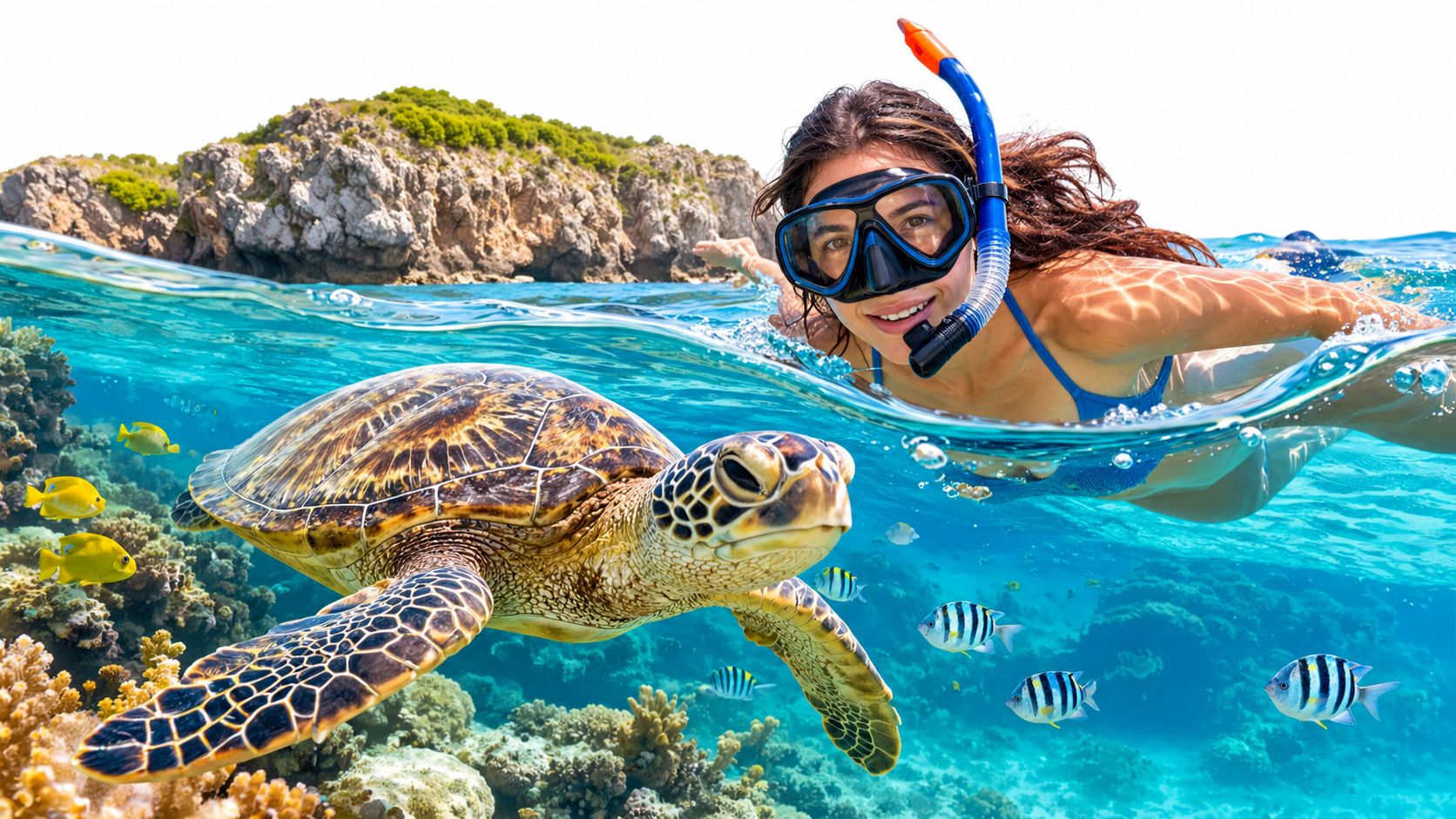
Read the reef before you book
Ask whether the crew gives a marine-life orientation and whether guides stay in the water with guests. A boat tour should make the site easier to access, not give visitors permission to pursue turtles. If you want a closer look at the location and trip logistics, review this Turtle Canyon snorkeling overview.
The reef is the reason to go. The boat is how you get there with guidance and a plan. Keep that distinction in mind when comparing tours that advertise sightings but say little about how the encounter is managed.
How to Know If a Tour Fits Your Group
Start with an honest question: can everyone in your group stay calm in open water while following a guide's directions? You don't need to be an expert swimmer to snorkel with flotation support, but you do need to be comfortable wearing a mask and staying with the group. If open water makes you panic, choose a land-based activity or talk with the operator before booking rather than hoping the feeling will pass once you're offshore.
Families should consider each child's comfort, not just age. Snorkel Turtle Canyon accommodates children ages three and up, with flotation support available. A young child who won't keep a mask on or stay near a guide may have a harder time than an older beginner who listens and floats calmly.
Use this fit check
- Choose a guided trip if you're a beginner who can follow instructions. Flotation and in-water guidance can help you get comfortable, but they don't eliminate the need to listen and stay with the group.
- Pause if seasickness is a serious concern. A boat ride can be rougher than the beach feels, and severe seasickness can make the outing miserable.
- Bring the basics. Pack a towel, reef-conscious sunscreen, and a dry bag for valuables. Check the operator's current instructions for what to wear and what to leave behind.
- Ask what's included. Confirm whether the crew supplies sanitized masks, snorkels, fins, and flotation vests, and whether drinking water or snacks are available.
- Sort out transport before the morning. Confirm the departure location and any pickup arrangements directly with the operator. Don't assume a hotel pickup is included just because the trip is convenient to Waikiki.
A turtle sighting isn't guaranteed, even for an experienced crew. If a close photo of a particular turtle is your main goal, this is the wrong way to measure whether the trip succeeds.
Reading the Rules Every Crew Should Follow on the Water
Honu are protected under the federal Endangered Species Act and Hawaiʻi state law, and the rules around them have teeth. Touching, feeding, chasing, or crowding a turtle can be unlawful, whether the contact happens in the water or on the sand. Read Hawaiʻi DLNR's sea-turtle guidance before your trip so the ground rules are familiar before you ever spot a shell.
Two distance numbers get quoted around Turtle Canyon, and they apply to different situations. Swimmers and snorkelers should stay at least 10 feet (3 meters) away from a turtle, in the water and on shore. The 50-yard figure is a vessel rule: NOAA's marine-life viewing guidance tells operators to hold that standoff, avoid pursuit or encirclement, slow to a no-wake speed, and put engines in neutral when a turtle surfaces near the boat. If a turtle swims toward you instead, stay calm and let it pass. Closing the gap to reach out still counts as a disturbance.
A crew's behavior tells you more than its briefing script. The guide should set expectations before anyone enters the water, hold the separation, and reposition guests away from a turtle rather than steering the group toward one. Boat handling deserves a look too. NOAA's Hawaiian green-turtle guidance calls for transiting harbors, boat ramps, and reef areas at roughly 5 to 10 knots with a lookout watching for wildlife; the full recommendations sit in NOAA's Hawaiʻi marine-wildlife viewing guidance. A responsible operator applies the same standard at minute forty as it did during the dockside talk.
Ask an operator how its crew handles a surfacing turtle before you book; the questions worth raising are laid out in the Turtle Canyon tour FAQ.
A dockside and in-water checklist
- Distance: The crew explains and enforces the 10-foot buffer for swimmers, and guests never block or surround a turtle that drifts closer on its own.
- No feeding or touching: Stated plainly, on the boat and in the water. Feeding teaches turtles to associate boats with handouts, and any touching is a disturbance.
- No encircling or pursuit: The guide keeps the group from closing around an animal or chasing it for a photo, and the boat does not converge on a surfacing turtle.
- Supervised water time: The crew explains how guests enter and exit, keeps the group together, and rotates viewing positions rather than letting everyone shadow one turtle.
Waikiki Turtle Tours vs Other Oahu Ways to See Honu
Pick the outing that matches your priority. A Turtle Canyon boat tour is for visitors who want guided access to an offshore reef; it isn't the only way to enjoy Oahu's water, and it won't suit every swimmer or every schedule.
| Option | Consider it if… | The trade-off |
|---|---|---|
| Turtle Canyon by boat | You want a guided offshore snorkel with transport, equipment, and supervision. | You'll be in open water, and turtle sightings remain wildlife encounters, not a guarantee. |
| Hanauma Bay | Your group wants a shore-based snorkel day and time to explore a protected bay. | Shore entry and the park's visitor procedures make it a different kind of outing from a short boat excursion. Check current access arrangements before you go. |
| North Shore, including Shark's Cove | You have reef-snorkeling experience and conditions are suitable. | Exposure and water conditions can change; don't treat a popular spot as an automatic beginner choice. |
| Independent Waikiki shore snorkeling | You value flexibility and want to stay close to land. | You'll handle your own gear and choose your entry point, and a shore reef isn't the same as reaching Turtle Canyon. |
| Waikiki sunset cruise | You want a relaxed evening on the water rather than a snorkeling-focused trip. | It's a different pace and purpose, not a substitute for an in-water wildlife tour. |
Match the trip to your actual goal
If easy logistics and a guide matter most, the boat format is worth considering. If you're a confident reef snorkeler who wants more freedom to choose when and where to enter, a shore option may suit you better, provided the conditions and your skills match.
For families, ask how the operator handles flotation, supervision, and anxious swimmers before you book. For anyone who mainly wants a peaceful ride and views from the water, a sunset cruise is the more sensible choice. Don't book a snorkel trip because you think every visitor should do one. Book it because you and your group are ready for the ocean.
What a Responsible Honu Encounter Looks Like
The best encounter I can give you is usually short. The turtle keeps feeding, keeps resting, keeps its line across the reef, and nobody in the water forces it to change any of that. A good guide reads the animal, spaces the group out, and pulls everyone back the moment its behavior shifts. If your sighting ends quickly because the turtle moved off, that is the trip working correctly.
Distance is your quality signal. A crowd pressed in close for photos tells you the crew let it happen.
That restraint also pays the communities that host these animals. A global comparison of sea-turtle tourism covering 18 marine-turtle sites found that nine non-consumptive tourism operations averaged about US$1.65 million a year. That is nearly three times the US$582,000 average at nine sites that used turtles consumptively. The same comparison put annual income at roughly US$6.7 million for Tortuguero National Park in Costa Rica, counting what visitors spend on accommodation, food, transport, and souvenirs. Living turtles keep earning. Harvested ones earn once.
Judge the operator by the animal's behavior
A crew that teaches you how to watch wildlife is selling more than a boat ride. The briefing, the spacing, and the willingness to leave a turtle alone are the product. Ask before you book what the guide does when a turtle turns away from the group. A responsible operator answers "we back off" without hesitating.
There is a practical reason for the patience. Green turtles replace themselves slowly. As covered in the NOAA guidance linked earlier, Hawaiian adults typically mature at roughly 25–35 years, and females generally nest about once every four years. Every resting adult you see took decades to get there.
The wider picture is better than it used to be, and still unfinished. A global assessment evaluated 48 marine-turtle populations across six species and found more than 40% categorized as low risk and low threat, up from 23% in 2011, with fisheries bycatch still the leading worldwide threat. Those findings are detailed in the IUCN global marine-turtle assessment.
Judge your trip by what the turtle does after you leave. If it goes back to feeding on the same patch of reef, the crew ran it right. That outcome is worth more than any close photo.
Common Mistakes First-Time Visitors Make Around Honu
The biggest mistake is treating a turtle's calm behavior as an invitation. A resting animal might not move when people get too close, but that doesn't mean the contact is harmless. Hawaiʻi DLNR says observers shouldn't touch, restrain, pursue, ride, or otherwise disturb sea turtles; feeding or touching is illegal under the guidance in its sea-turtle protection notice.
Other habits can spoil the experience just as quickly. Chasing won't improve your view if it makes the turtle change course or disappear from sight. A photo doesn't justify closing the gap; stay at the recommended distance and use your camera from where you are.
- "If I float, the turtle will come to me." Maybe it will pass nearby, maybe it won't. Don't position yourself to intercept it.
- "Reef-safe sunscreen is just a marketing phrase." Follow the operator's reef-care guidance and choose sunscreen with the reef in mind. Pollution is among the pressures on marine turtles and their habitat.
- "Any rental mask will do." A poor fit leaks and distracts you. Use the supplied gear if it fits, and tell the crew if it doesn't.
- "Kids are guaranteed to see a turtle." Children can enjoy the boat and reef, but no wild sighting is promised. Their comfort and willingness to follow directions matter more than a sales claim.
- "Morning or afternoon makes no difference." Conditions change. Ask the operator which departure they recommend for the day instead of assuming every time slot feels the same.
- "Touching a sleeping turtle won't hurt it if it doesn't move." Don't touch it. A still animal still deserves space.
Your Pre-Booking Checklist for the Best Turtle Canyon Trip
Before paying, confirm the departure point, what equipment is included, and how the crew supervises beginners. Ask directly how guides maintain the 10-foot distance, what flotation is available for children and nervous swimmers, and what happens if weather or sea conditions make the plan unsuitable. If your group has mobility needs, medical concerns, or anyone prone to seasickness, discuss that before booking.
Check the operator's current departure times and cancellation or rescheduling terms, then book early enough in your trip to leave room for a backup day if conditions change. The Snorkel Turtle Canyon website lists its guided boat snorkeling experience and trip details. Choose a tour only if everyone in your group is comfortable with the format and the crew's wildlife rules.
If a guided offshore snorkel fits your group, review the details and reserve a Turtle Canyon excursion through Snorkel Turtle Canyon's booking page.
A More Responsible Way to See Honu
Snorkel Turtle Canyon offers guided boat access to an offshore reef, with provided gear, flotation, and in-water guidance for observing Hawaiian green sea turtles and reef fish. If you're ready to snorkel with a crew that puts wildlife space and guest supervision at the center of the trip, visit Snorkel Turtle Canyon.