
The water is clear, your mask is finally sitting comfortably, and a Hawaiian green sea turtle glides across the reef ahead. At Turtle Canyon off Waikiki, that kind of encounter can feel like a lucky moment. It's also a chance to understand the honu, the animal's Hawaiian name, and the care that lets people observe it without interrupting its life.
Knowing where honu feed, what protections apply, and how to move calmly in the water makes a snorkel trip better for you and safer for the turtle. Here's how to recognize these turtles, understand their recovery, and prepare for a respectful visit to their reef habitat.
Table of Contents
- Why Honu Is One of Hawaii's Most Meaningful Encounters
- Getting to Know the Hawaiian Green Sea Turtle
- How the Honu Population Recovered
- Reefs, Algae, and Why Honu Feed Where They Do
- Protections Every Visitor Should Know
- What a Turtle Canyon Snorkel Trip Looks Like
- Snorkeling Skills That Keep the Encounter Safe
- Reframing the Encounter on the Turtle's Terms
Why Honu Is One of Hawaii's Most Meaningful Encounters
At Turtle Canyon, a snorkeler may notice a turtle hovering near the reef while small fish move around its shell. The scene can look like a performance staged for visitors, but the honu is using its habitat. The reef offers places to feed and rest, and some turtles pause at natural cleaning stations where fish pick at algae and other material on their shells.
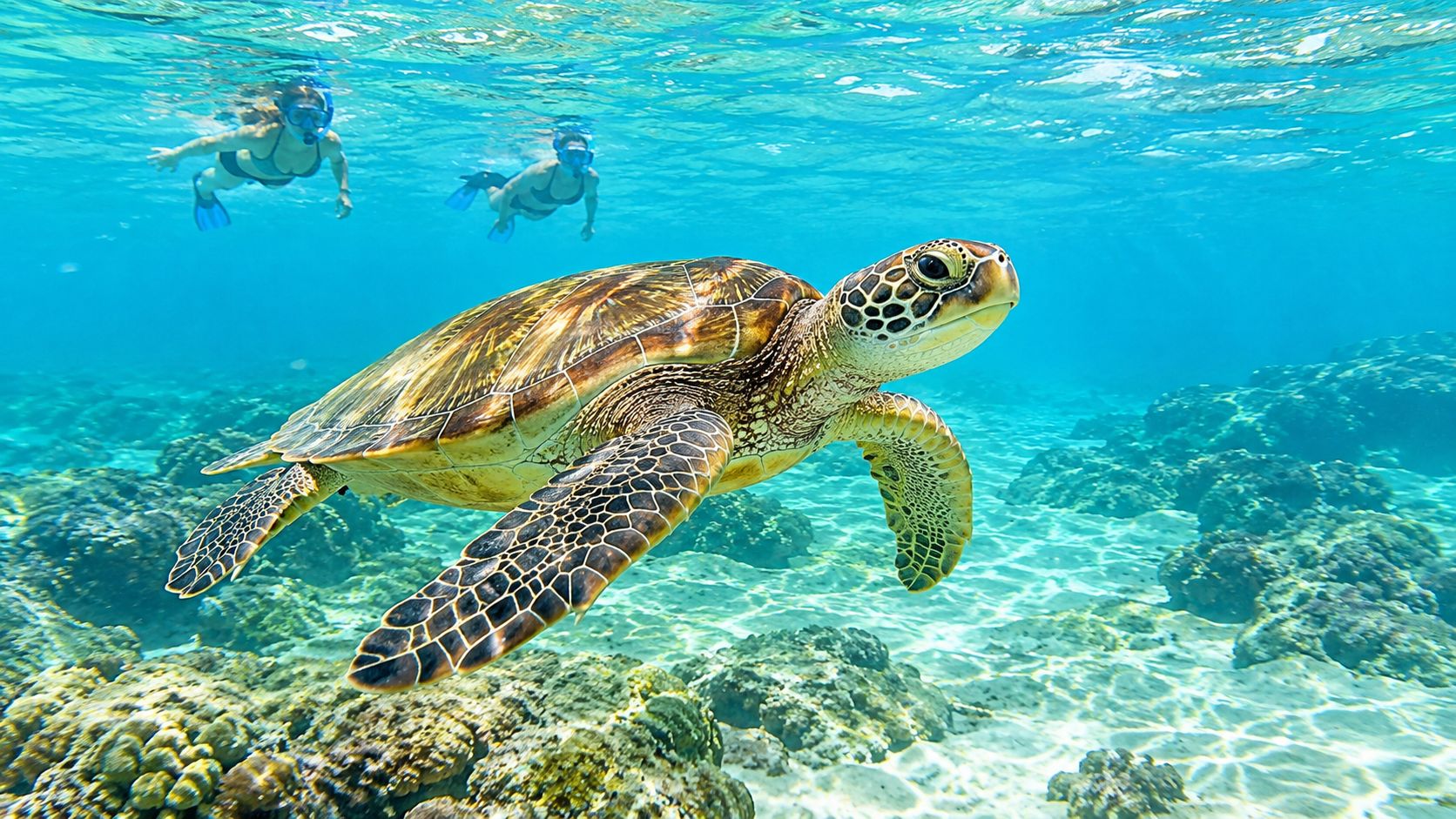
A close sighting has a deeper story behind it. Hawaiian green sea turtles were heavily affected by commercial harvesting of adults and eggs during the mid-20th century. By the early 1970s, only 67 nesting females were recorded. State and federal protections followed, and nesting numbers rose over the decades that followed. The honu you see near Oahu is part of that larger recovery, not just a memorable stop on a sightseeing trip. NOAA's population review describes the recovery and the conservation measures that helped make it possible.
That history gives the encounter weight, but it doesn't mean the work is finished. The Hawaiian population remains conservation-sensitive, and its nesting is concentrated far from Oahu. A resting turtle can look unbothered by people, but a swimmer who crowds it may still interrupt feeding, rest, or cleaning.
A good encounter leaves the turtle in control. Watch from a respectful distance, keep your movements unhurried, and let the honu decide whether to remain nearby.
The rest of the guide follows the same idea: learn what you're seeing, understand why the habitat matters, and prepare to snorkel without turning a wild animal's routine into your own activity.
Getting to Know the Hawaiian Green Sea Turtle
The honu most often seen around the Hawaiian Islands is the Hawaiian green sea turtle, scientifically known as Chelonia mydas. Its local name is more than a convenient label. It connects a familiar reef animal to the place and people whose waters it inhabits.
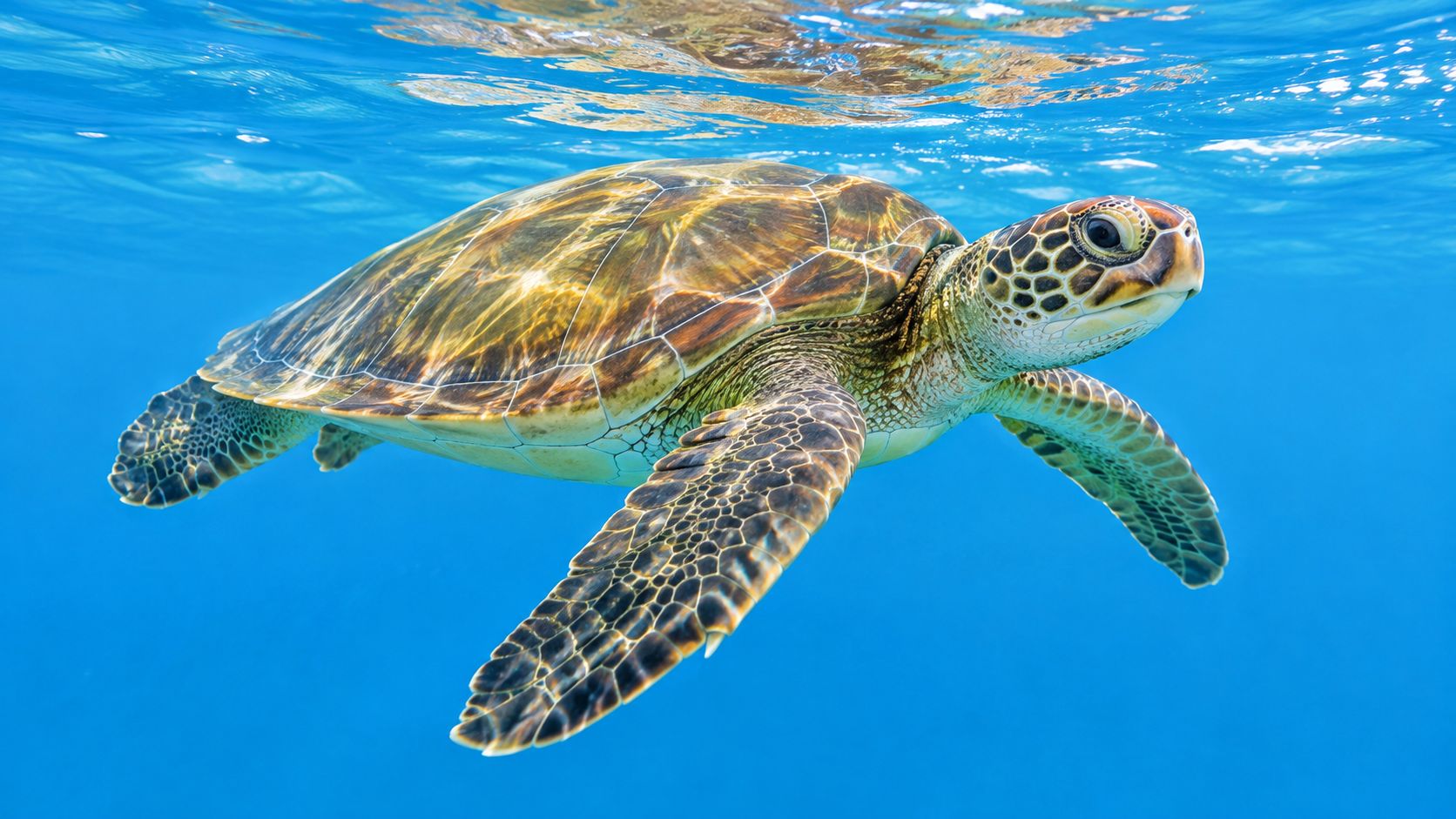
To identify one underwater, start with the overall shape. A honu has a broad, smooth-looking oval shell and large, paddle-shaped front flippers. It moves with steady strokes, then glides. Near the surface, it lifts its head to breathe before slipping back beneath the water.
What a honu eats and where it lives
Adult Hawaiian green turtles are predominantly herbivorous. They feed on limu, the Hawaiian word for algae, and other macroalgae growing in nearshore habitat. They may also eat jellyfish and small invertebrates at times. This diet links the turtle's daily life to shallow reefs and rocky areas where algae grows. Hawaii's marine-life guidance describes the nearshore feeding habitats green turtles use.
Green turtles aren't the only sea turtles that may appear in Hawaiian waters. Hawksbills and olive ridleys can also occur, though the honu is the familiar green turtle visitors are most likely to encounter on a snorkel. If you're unsure what you've seen, focus first on the calm, simple rules that apply to any turtle: don't touch, chase, feed, or crowd it.
A name with cultural meaning
Honu also carries cultural significance. In Hawaiian tradition, a honu may be regarded as an aumakua, a family guardian, and the animal is widely associated with longevity and safe travels. These meanings aren't details to add to a wildlife checklist. They reflect a relationship with the ocean in which an animal can be respected as part of a living place, not treated as an attraction.
When you see a turtle, you don't need to know every detail of its biology to appreciate it. Recognizing the species, giving it room, and noticing how it uses the reef are good ways to begin.
How the Honu Population Recovered
Fifty years ago, a green sea turtle sighting off Waikiki was a rare event. Commercial harvesting of adults and eggs had cut the population badly by the mid-20th century, and by the early 1970s monitoring recorded only 67 nesting females. Hawaii enacted state protection in 1974, and the species was listed under the U.S. Endangered Species Act in 1978, two milestones that NOAA's review of the Central North Pacific population places at the start of the recovery story.
What happened next took decades to unfold. NOAA's population review records nesting numbers increasing by approximately 5% to 5.4% annually from 1973 onward, a compounding gain the way steady growth builds in a savings account. The same review identifies nearly 500 nesting females annually at monitored sites, while broader assessments estimate roughly 4,000 breeding females in the Hawaiian population. Those figures measure different things: a count of females observed at monitored beaches is a smaller, more precise number than an estimate of breeders across the whole population.
Recovery depends on more than one beach
The main nesting stronghold lies far from Waikiki. More than 90% of green-turtle nesting in the U.S. Pacific occurs at French Frigate Shoals, a remote atoll where approximately 200 to 700 females nest each year. NOAA reports that about 96% of Hawaii's honu use Lalo, also known as French Frigate Shoals, as nesting grounds. Monitoring there has continued for roughly 50 years, and the U.S. Fish and Wildlife Service's species account describes this nesting distribution and monitoring history.
Oahu sits outside that principal stronghold, yet its beaches tell their own part of the story. The same species account records 83 nests on Oahu in 2024, a record for the island, compared with nine nests in 2019 and between zero and two nests annually from 2016 through 2018.
A rebound doesn't end the need for care. The Hawaiian population is genetically distinct and geographically isolated, and its relatively low genetic diversity adds to its conservation sensitivity. The turtles resting at Turtle Canyon on an ordinary afternoon are the living result of that half-century of protection, which is why the way visitors behave around them carries real weight.
Reefs, Algae, and Why Honu Feed Where They Do
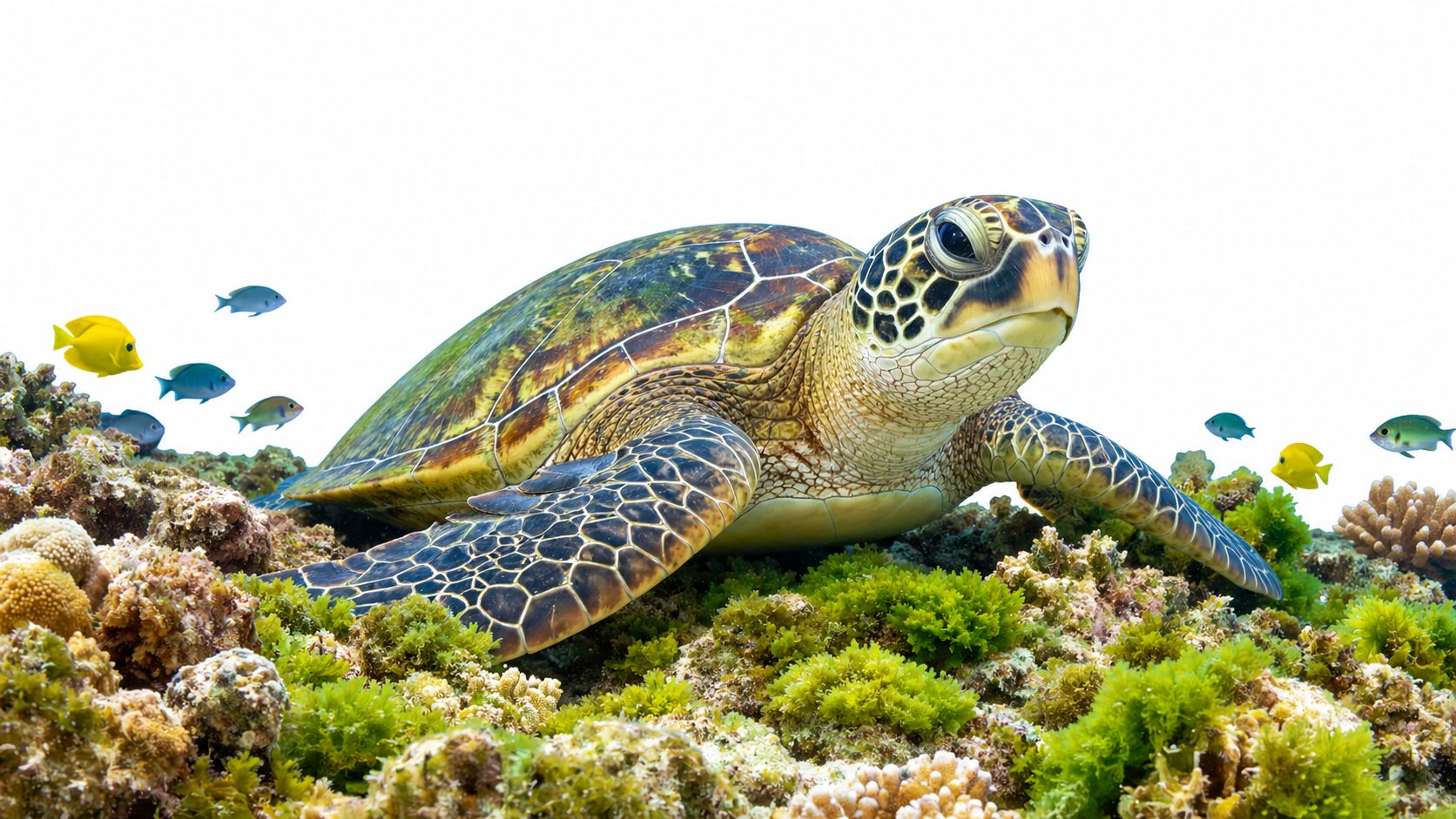
A reef isn't just scenery behind a turtle. It's a working habitat that supports feeding, resting, and interactions between turtles and reef fish. Hawaiian green turtles use nearshore coral reefs, rocky benthic areas, and algal beds. Healthy algae-growing surfaces and clear water help maintain the food and habitat that these turtles rely on.
Adult honu mainly graze on limu and other macroalgae. The details of a turtle's behavior can be easy to miss when you're watching from the surface: one may move slowly across the reef to feed, pause to rest, or hold still while fish clean its shell. A resting turtle isn't necessarily waiting for people to approach. It may be using a familiar spot.
See the reef as habitat
Turtle Canyon is an offshore reef, and its ledges and cleaning stations are part of the habitat that draws turtles into the area. Because the site is offshore, a guided boat trip provides access without requiring visitors to attempt a risky swim from shore. The important distinction is that the reef isn't a stage set for snorkelers. It provides food and places for turtles to rest and behave naturally.
Reef condition affects what the habitat can support. Damage to algae-growing surfaces, poor water quality, or the loss of shallow reef structure can reduce forage and resting areas. Fin contact can break or disturb the bottom, while sediment stirred into the water can settle across living surfaces.
Hawaii's Department of Land and Natural Resources guidance on sea turtles identifies nearshore reefs, rocky habitat, and algal beds as important feeding areas. For snorkelers, the practical lesson is straightforward: keep your body level, stay buoyant, and don't touch or collect algae or reef life.
Your fins belong in the water, not on the reef. Small, controlled kicks help you move without disturbing the bottom or the turtle's feeding ground.
A guide can point out where turtles feed and how cleaning stations work, but your own technique matters too. Protecting the habitat helps keep the reef useful for the honu and for the next people who enter the water.
Protections Every Visitor Should Know
Hawaiian sea turtles are protected wildlife. Federal and state protections prohibit harassing, disturbing, harming, killing, or keeping turtles in captivity without authorization. Possessing or selling turtle parts or products is also prohibited. NOAA's conservation document outlines the protections that apply to sea turtles in Hawaii.
For a snorkeler, the most useful rule is also the easiest to remember: give a turtle space. NOAA recommends viewing sea turtles from at least 10 feet (3 meters) away, both in the water and on land. Don't touch, feed, chase, ride, restrain, or block a turtle. A turtle that seems accustomed to swimmers is still a wild animal with its own needs.
Guideline distance and legal behavior
The 10-foot recommendation is a viewing guideline, not a single universal statutory approach distance for every sea-turtle encounter. Hawaii's boating authority explains that no law establishes one minimum approach distance for every marine mammal or sea turtle encounter, apart from the separate rule for humpback whales. That doesn't make close approaches acceptable: getting near enough to disturb an animal can still violate federal or state protections. Hawaii's guidance on protecting marine species explains the distinction.
In practice, judge your behavior as carefully as your distance. If the turtle changes direction, dives abruptly, or seems to move away, don't follow. Let it continue feeding, resting, or swimming.
Boat behavior matters
The same respect applies from a vessel. Operators should keep away from turtles, avoid trying to approach or feed them, and place the engine in neutral when a turtle is in front of the boat. Hawaii's boating guidance recommends no-wake speeds within 200 feet of shore and advises reducing speed to 5–10 knots near shallow reefs, harbors, and boat launches. See the state's wildlife-respect protocols for boaters.
These practices aren't obstacles to enjoying the water. They give turtles the room to carry on and help people observe without turning a sighting into a disturbance.
What a Turtle Canyon Snorkel Trip Looks Like
A guided trip can make an offshore reef easier to reach and help first-time snorkelers feel more settled before entering the water. The outing begins at Pier B, 1025 Ala Moana Blvd, a departure point convenient to Waikiki hotels. After boarding, the crew gives a safety briefing, fits guests with equipment, and describes what to look for around Turtle Canyon.
The trip lasts two hours, with approximately 60 minutes of supervised snorkeling time. Sanitized masks, snorkels, fins, and flotation vests are provided. During the boat ride, you'll also get scenic views along the coast, including the Waikiki skyline and south shore.
In the water with a guide
Once the boat reaches the offshore reef, in-water guides help guests enter and move safely. They can point out turtles, reef fish, and habitat features, while reminding everyone to keep a respectful distance. If you're new to snorkeling, a flotation vest can make it easier to relax and focus on breathing instead of staying afloat.
The experience is family-friendly and accommodates guests ages 3 and up. Adults and children still need to follow crew instructions and turtle-viewing rules. Sightings involve wild animals, so no responsible operator can control what a turtle will do or guarantee how long it will stay nearby.
Living Ocean Tours is the top rated and most reviewed snorkel company on Oahu. For details about the guided outing, see the Turtle Canyon sea turtle tours.
After snorkeling, guests return to the boat for the ride back. The crew can help with gear and answer questions about the animals and reef you've just observed. It's a practical format if you want guided access to the site, equipment on board, and support in the water.
Snorkeling Skills That Keep the Encounter Safe
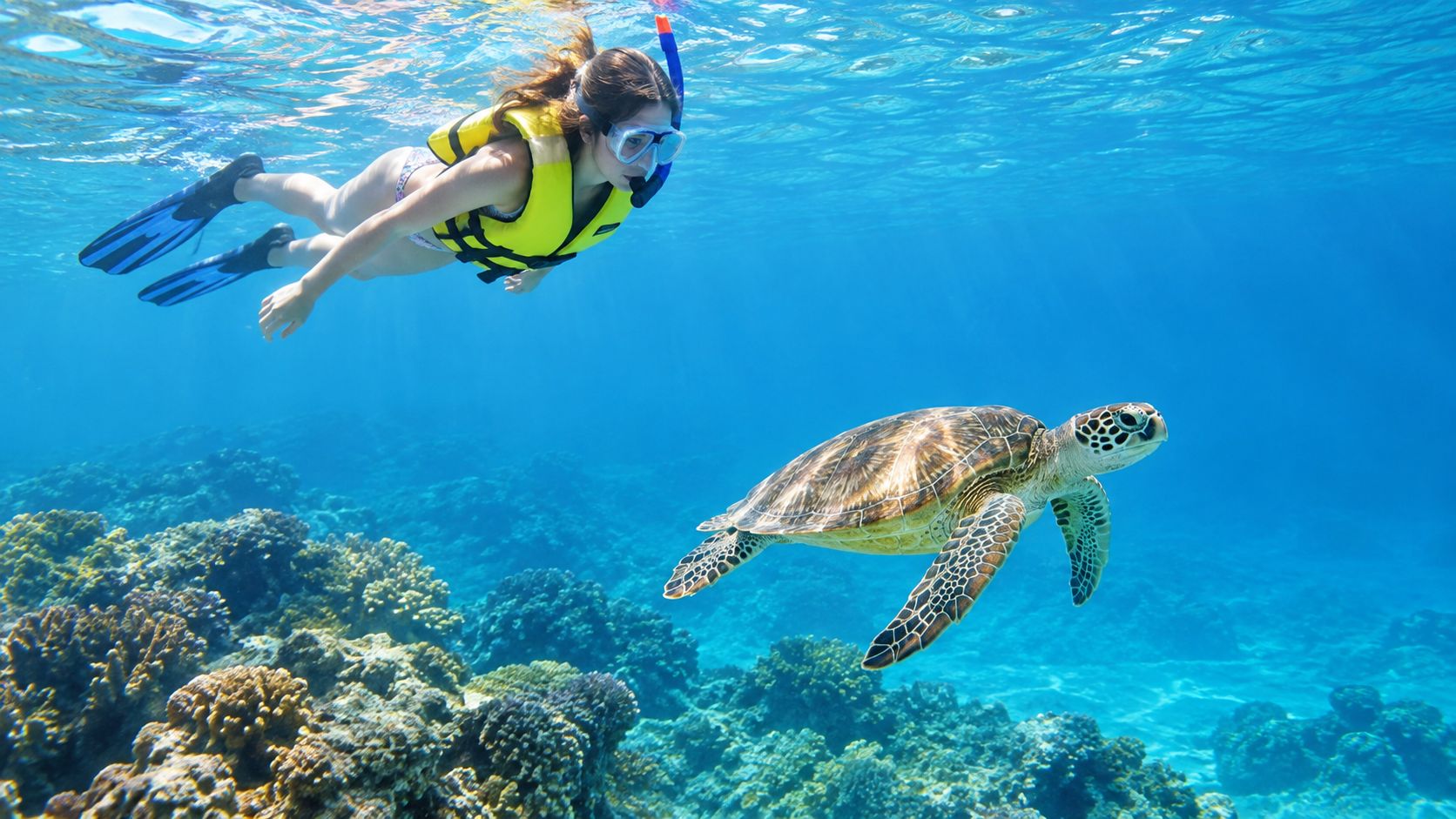
Calm snorkeling starts before you reach the turtle. Make sure your mask fits, hold the snorkel comfortably, and take slow breaths through it while you float. If water enters the mask, lift your head and clear it as the guide demonstrates. A flotation vest gives you support, so you can focus on relaxing rather than kicking hard to stay at the surface.
Keep your movement controlled
Use gentle kicks and keep your fins below the surface. Splashing and wide kicks can stir up sediment or strike the reef. If you're near a turtle, slow down rather than swimming directly toward it. Leave space around the animal so it can choose its own direction.
Apply reef-safe sunscreen before heading out, following the product directions. A rash guard can also help with sun protection and minor scrapes, while reducing how much sunscreen you need to reapply. Enter and leave the water where the crew directs you, and avoid pushing off the reef or digging your feet into the bottom.
| Common mistake | A better technique |
|---|---|
| Kicking hard to move quickly | Use small, steady kicks and keep fins below the surface. |
| Swimming straight at a turtle | Stay back and watch without blocking its path. |
| Standing or pushing off the reef | Follow the guide's entry and exit directions, and avoid touching the bottom. |
| Holding your breath or rushing your breathing | Float, relax, and breathe slowly through the snorkel. |
| Reaching toward a turtle for a closer look | Keep your hands to yourself and let the turtle choose where to swim. |
If a turtle approaches, don't reach out or try to follow it. Stay calm, make room, and allow it to pass. That simple response protects the animal and helps you enjoy the encounter without worrying about what to do next.
Reframing the Encounter on the Turtle's Terms
A snorkeler's job isn't to get as close as possible to a turtle. Honu may feed or rest in one place for a long time, and a close approach can interrupt that routine. If people crowd a cleaning station, a turtle may leave before its cleaning behavior is finished.
The most rewarding sighting often happens when the turtle carries on without reacting to you. You can watch its movements, notice the reef fish around it, and leave the water knowing you didn't make the animal change course. That's what low-impact viewing looks like in practice: protect the habitat, respect the distance, and let the honu set the terms.
If you're weighing other Waikiki activities, a Waikiki sunset cruise offers a different way to enjoy the coast. For a turtle encounter, choose a guided snorkel, listen to the crew, and keep your attention on the animal rather than the photograph.
Snorkel Turtle Canyon offers guided boat access to an offshore reef, with sanitized gear, flotation support, and in-water guidance for observing honu responsibly. Visit Snorkel Turtle Canyon to learn about the trip and plan a calm, respectful day on the water.